

The Day Often Starts Before We Are Ready To Deal With It
For most of us the day starts before we’re ready do deal with it and the choices it brings.
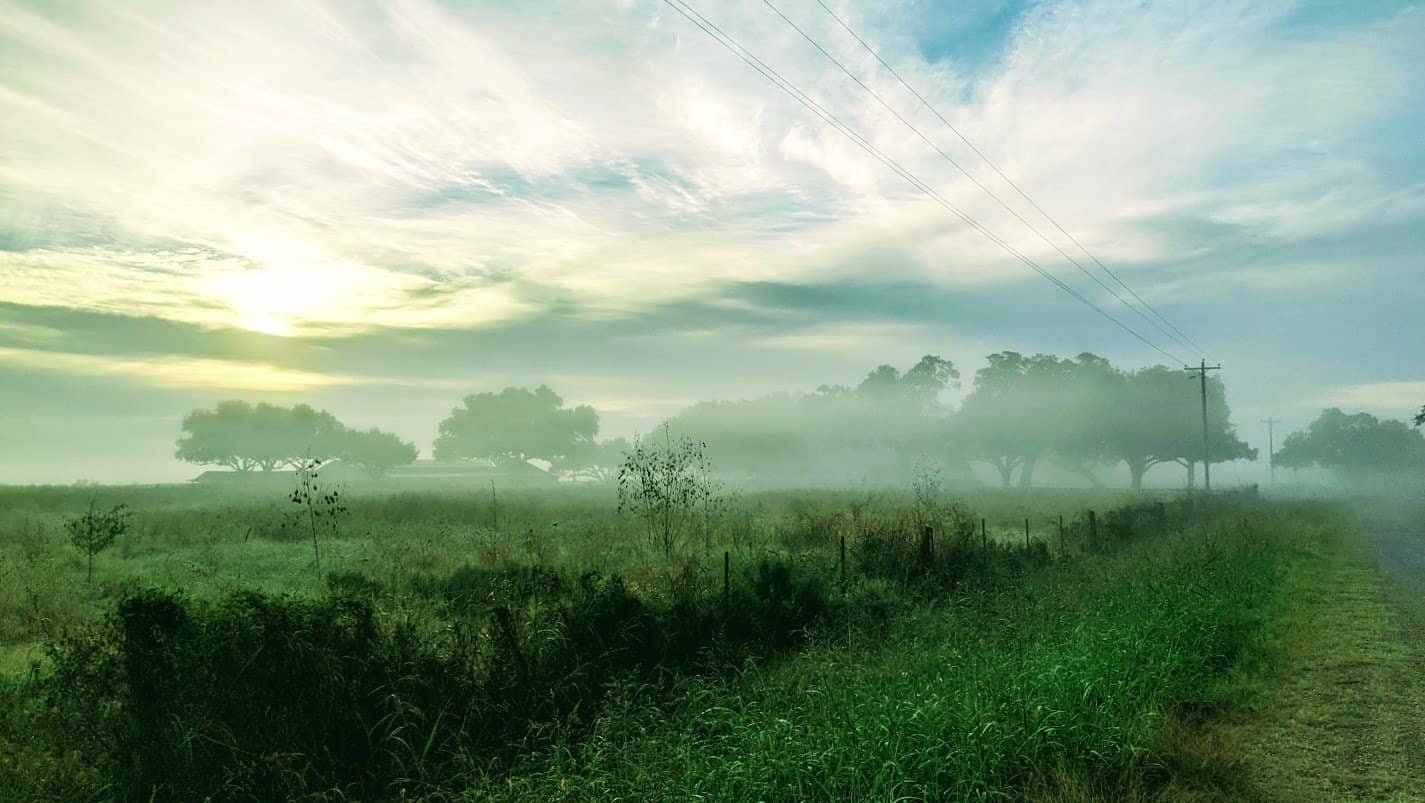
Light creeps across the blinds. A phone buzzes in the other room. In my case the oil train goes by. I'm currently living in the middle of an oilfield. Which is grand. I'm grateful for everything (that's the first daily choice) . However, grateful or distressed, happy or un, ...the world is already in motion, and time is pulling us into its current of choices once again.
Most of us wake up with the same quiet pressure: Another day. Another round of choices. Whatever happened yesterday—success, failure, regret, joy; exists only as memory. Time has carried us to a fresh stretch of road whether we want to be there or not.
We like to imagine the walk of faith as a grand journey toward heaven. A distant goal. A far-off destination. Something we reach after we’ve outlasted what life and the world do to us. But faith isn’t a marathon prize. It’s something far more immediate, and far more demanding. We don’t meet Jesus at the end of the road. We meet Him in the hours we’re living right now. This is where our daily choices begin.
Time shoves us forward, whether we resist it or not. But what we become inside that movement—that’s where the real discipleship happens.
Anchor in the Word
Key Scripture Passage
So be careful how you live. Don’t live like fools, but like those who are wise. Make the most of every opportunity in these evil days
(Ephesians 5:15-16, NLT)Key Scripture Context
Paul wrote these words to ordinary people navigating ordinary pressures: work, relationships, disagreements, temptations, habits, hopes, frustrations. His instruction wasn’t mystical or abstract. It was practical. The wise person is simply someone who treats time as a holy trust, an opportunity. Not because the clock is sacred, but because every moment is a place where we choose who we are becoming in Christ.
What We’re Facing
Time can feel like a burden, a thief, or a relentless taskmaster. But Scripture frames time differently. It is the landscape where our choices take shape. And the trouble is, most of us aren’t choosing: we’re reacting.
Three forces push us off-course:
1. Systemic Distraction
Life is loud now. Notifications, news cycles, polarized arguments, doomscrolling, ads engineered to capture attention. We rarely have a moment unclaimed. This distraction doesn’t just steal time. It steals awareness. We end up making choices on autopilot without noticing.
2. Spiritual Drift
We drift whenever the day owns us instead of us owning the day. Drift doesn’t feel dramatic. It feels normal. That’s the danger. Hours slip by, and we slowly become less patient, less present, less gentle, less honest. Not because we chose those things, but because we didn’t choose anything.
3. Cultural Definitions of Success
Culture says the “goal” is the future—retirement, comfort, achievement, status, heaven-as-endgame. Scripture says the goal is faithfulness today.
Jesus never celebrated “long-term religious results.” He celebrated small daily choices: quiet mercy, hidden generosity, honest prayer, courageous love.
Time pushes us through the day. But the day reveals the heart.
Then and Now: Drawing Parallels
Ancient Israel lived with a deeply different sense of time. Their calendar was shaped by cycles of harvest, rest, and worship. Days were not obstacles. They were opportunities to remember who they belonged to.
When Jesus walked into first-century life, He didn’t call people toward a distant spiritual finish line. He called them into the moment:
“Follow Me” (Matthew 4:19) was a today command.
“Give us this day our daily bread” (Matthew 6:11) was a today prayer.
“Take up your cross daily” (Luke 9:23) was a today identity.
“Don’t worry about tomorrow” (Matthew 6:34) was a today freedom.
Now, our world measures time by productivity, efficiency, output. If you’re not accomplishing something measurable, you’re “wasting time.” Jesus measured time by formation.
A day spent loving, listening, forgiving, serving, or remaining faithful—even quietly—is a day that shapes the soul.
We often think the spiritual life is built in the big moments. The truth is closer to the opposite:
The spiritual life is built in the ordinary moments that nobody sees.
What mattered then still matters now:
What do we say to the person in front of us?
How do we handle irritation, fatigue, interruption?
How do we approach the tasks we would rather avoid?
How do we treat the stranger, the friend, the critic, the family member?
How do we respond when the moment hands us the unexpected?
These are not small things. They are the scaffolding of a life formed in Christ.
Theological Truth in Plain Language (Daily Choices in Practice)
Time is not the enemy.
And it’s not the judge.
Time is the teacher.
Karl Barth wrote, “To clasp hands in prayer is the beginning of an uprising against the disorder of the world.”¹
Every moment of the day invites this uprising, quiet, steady, interior. A rebellion against distraction, fear, pettiness, bitterness, and reactionary living.
A.W. Tozer put it even more bluntly: “As we move into the future, the questions we ask of the day determine whether we grow in Christ or grow into ourselves.”²
Every day presents those questions. Time simply presses them upon us.
Here is the truth in simple terms:
Heaven is not the prize at the end of the road. Christ is shaping us now, here, in the plain hours of the day.
Our choices today become our character tomorrow.
This is why Scripture emphasizes:
guard your heart (Proverbs 4:23)
renew your mind (Romans 12:2)
walk by the Spirit (Galatians 5:25)
clothe yourselves with compassion (Colossians 3:12)
None of these are future tasks.
They are present-tense realities.
The Christian life doesn’t wait for a crisis. It’s formed in all the small decisions long before the crisis arrives.
Practical Moves of Faith
If time is a teacher, then the classroom is the day you’re living right now. Here are four ways to treat today as holy ground:
1. Begin With Awareness
Before you check your phone, before you start the day, pause.
Breathe.
Name the day before God:
“Lord, shape my choices today.”
Awareness is the doorway to intentional living. You cannot choose what you do not notice.
Prayer Prompt: Lord, open my eyes to the choices hidden in my ordinary moments.
2. Respond, Don’t React
Most conflict, internal or external, comes from reaction.
Responding is different. Responding is slow, considered, grounded.
Ask:
What would look like Christ in this moment?
That single question reshapes the day.
Prayer Prompt: Jesus, steady my heart so I can respond with wisdom instead of reacting with fear.
3. Turn Necessity Into Worship
You may not enjoy your tasks.
You may have responsibilities that feel draining or invisible.
But when you offer them to Christ: your job, parenting, caregiving, errands, conversations, duties, they become sacred.
Work done in love becomes worship.
Work done patiently becomes witness.
Work done faithfully becomes formation.
Prayer Prompt: God, take the ordinary tasks of today and use them to form me.
4. Redeem the Small Moments
Tiny choices matter:
A softer tone.
A slower answer.
A kinder word.
A moment of restraint.
A step away from bitterness.
An act of generosity.
These are not small. These are the building blocks of Christ’s life in you.
Prayer Prompt: Lord, help me see every small moment as a chance to live like You.
More Light for the Journey
Psalm 90:12 (NLT): “Teach us to realize the brevity of life, so that we may grow in wisdom.”
Wisdom grows when we treat today as our teacher.
Colossians 3:17 (NLT): “And whatever you do or say, do it as a representative of the Lord Jesus.”
Every action becomes part of our witness.
James 4:14-15 (NLT): “Your life is like the morning fog… What you ought to say is, ‘If the Lord wants us to, we will do this or that.’”
Humility turns time into trust.
Psalm 118:24 (NLT): “This is the day the Lord has made. We will rejoice and be glad in it.”
A reminder that today is enough.
Let’s Walk This Out Together
Most people think spiritual growth is about achievement, credentials, or the dramatic moments of life. But real formation happens in the quiet hours nobody else notices.
You do not have to master time.
You only have to be present to the moments God gives you.
We are walking this road with you: slowly, honestly, one day at a time.
And if today feels heavy, or scattered, or unfinished, remember: God meets you where you are, not where you think you should be.
Journaling Prompts
1. What part of my day tends to pull me into reaction instead of response?
Prayer Prompt: Lord, help me see the moments where I lose my grounding. Show me the triggers I overlook and teach me how to pause long enough to respond with Your steadiness.
2. Where do I sense Christ inviting me to approach a task or conversation differently?
Prayer Prompt: Jesus, open my heart to Your gentle correction. Help me notice the one place today where You are nudging me toward a different posture or a deeper kindness.
3. Which small choice today could shape me toward patience, compassion, or honesty?
Prayer Prompt: God, help me recognize the small but holy opportunities in front of me. Give me the courage to choose the slow, true, loving way—even when it costs me comfort.
4. Where does time feel like an enemy—and what would it mean to treat it as a teacher?
Prayer Prompt: Lord, reshape my relationship with time. Quiet my fear of not doing enough and teach me how to receive today as a gift, not a burden.
Footnotes
Karl Barth, Church Dogmatics, Vol. III.
A.W. Tozer, The Root of the Righteous.