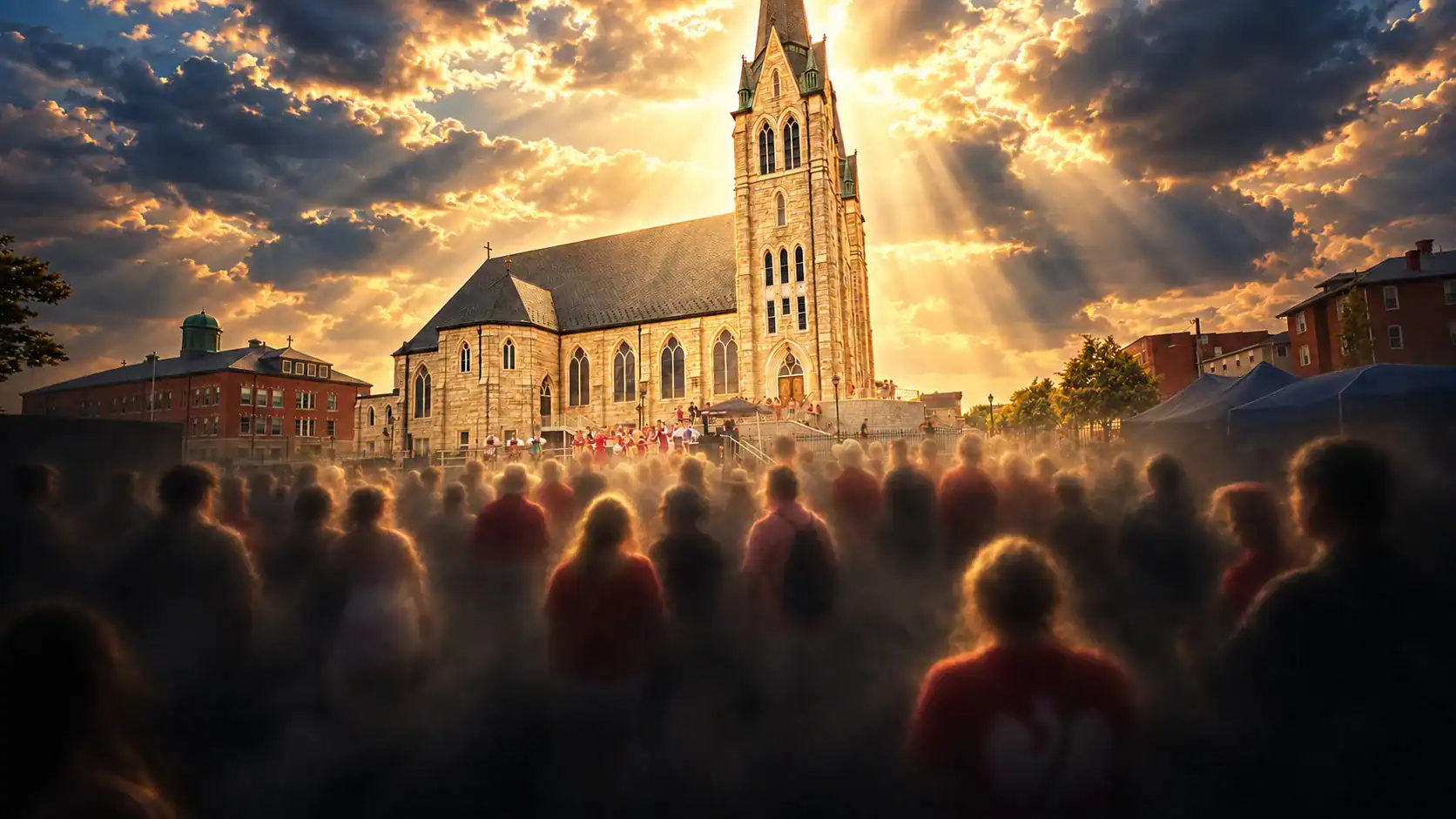


Pastor Scandals and The Plurality of Elders (Image Generated by AI)
The plurality of elders, or collegial eldership is not a minor church government issue. It is one of the New Testament’s quieter safeguards against celebrity-shaped leadership, spiritual abuse, and the slow drift from shepherding into control.
I was introduced to the concept of Plural Eldership in 2001 or 2002 when I met with pastor and author David A. Huston to discuss selling his book, God’s Plan for Oversight in the Glorious Church, in an online bookstore I was running at the time. To this point I had only been exposed to hierarchical church leadership models and was deeply intrigued with it at the time. My pastor, at the time, strongly discouraged such intrigue. Ours, like many conservative assemblies believed a single strong pastor is needed to keep the saints in line.
Me being me I kept on silently letting my intrigue travel on in an environment of ask all the questions you want, but if you don't like my answers hit the road.
This article has been simmering for a long time. Every few months, another pastor scandal breaks across the church world. And everytime that headline passes my eyes I write this article in my head. Again, and again. So lets make it real yeah?
The names change. The statements change. The sordid and sometimes depraved details vary. But the wound feels familiar. One gifted man became too central, too protected, too trusted, and too difficult to question. Then the sheep are left to sort through grief, anger, confusion, and the terrible question beneath it all.
Was this just one man’s failure, or was the whole leadership model part of the problem?
That question matters. Even though so few people are asking it out loud.
Not because every pastor is corrupt. Not because leadership is evil. Not because believers need less care, less teaching, or less guidance. The question matters because the New Testament never told us to build gatherings around one impressive man. It never told us to turn shepherds into brands, pulpits into platforms, or pastors into celebrity CEOs.
The New Testament gives us something quieter, healthier, and harder to market.
It gives us collegial eldership: a plurality of elders.
“The first thing to note [in Scripture] about the pastors or elders of a local church is that they are plural.”1
That may sound like church-government language. It may sound technical, dry, or institutional. But it is not dry when you have watched a congregation bleed because one man had too much power and too little correction. It is not technical when victims were ignored, staff were silenced, warning signs were managed, and accountability existed only on paper.
This is not an anti-pastor article.
It is doctrine without the machinery.
It is an attempt to ask what Scripture actually gives us before we load church leadership down with celebrity culture, corporate management language, platform anxiety, donor protection, institutional self-defense, and the exhausting myth that one person can carry the spiritual weight of an entire body.
Biblical Eldership Is Not a Personality Contest
There are charismatic people in the world. That is not new.
Some people speak with unusual clarity. Some teach with power. Some organize well. Some carry a room naturally. Those gifts can serve the body of Christ when they are submitted to Christ and held within healthy community.
But something dangerous happens when a church begins to gather around the gift more than the Giver.
The problem is not simply a pastor with strong gifts. It is a system where one person becomes the center of gravity. His voice becomes the final voice. His instincts become the church’s direction. His public image becomes the church’s reputation. His personality becomes the atmosphere.
Eventually, the church may still say Christ is the head, but functionally, the pastor is.
That is where the machinery begins.
It does not always begin with obvious corruption. Sometimes it begins with usefulness.
The man can preach. People come. The church grows. The clips spread. The giving rises. The staff expands. The buildings improve. Suddenly, everything depends on keeping the engine running.
At first, the pastor serves the mission. Then the mission becomes inseparable from the pastor.
People say things like, I go there because of his preaching.
Or, Nobody teaches like him.
Or, If he ever left, the church would fall apart.
That last sentence should terrify us.
A church may be blessed by gifted teachers, but no healthy body should be so dependent on one man that his collapse becomes the collapse of the whole community. Paul did not describe the church as an audience gathered around a spiritual performer. He described it as a body, joined together, with many parts and Christ as the head.
When one pastor becomes the brand, the congregation slowly forgets how to be the body.
People stop asking whether the church is forming disciples. They ask whether the platform is growing. They stop asking whether the sheep are being tended. They ask whether the preaching is still impressive. They stop asking whether the leader is becoming more like Christ. They ask whether he is still successful.
That is not shepherding.
That is machinery.
When the Pastor Becomes the CEO
There is nothing wrong with administration.
Churches need order. Finances need integrity. Staff need clarity. Ministries need coordination. Confusion does not become spiritual just because it happens in a church building.
But the New Testament image for spiritual leadership is not corporate celebrity leadership.
It is shepherding.
A CEO model tends to move authority upward and relationship outward. The leader becomes more distant, more protected, more managed, and more insulated. Access narrows. Staff become layers. Congregants become metrics. Criticism becomes disloyalty. Growth becomes proof of blessing.
But shepherds smell like sheep.
They know the condition of the flock. They are not merely vision-casters. They are caretakers. They guard, teach, correct, comfort, and stay close enough to notice wounds.
The danger of the pastor-as-CEO model is not that organization exists. The danger is that organizational success can begin to replace spiritual health. A church can grow larger while becoming less honest. It can become more efficient while becoming less safe. It can build systems that protect the machine instead of people.
And when that happens, the title pastor
remains, but the work of shepherding thins out.
The machine can keep moving.
The sheep can still be starving.
When No One Can Safely Say No
The most dangerous leader is not always the loudest tyrant.
Sometimes the most dangerous leader is the one everyone quietly knows not to challenge.
There may be elders. There may be a board. There may be staff meetings, policies, committees, advisors, and official processes. But if nobody can safely say no, accountability is ornamental.
If the lead pastor can appoint the people who oversee him, remove the people who question him, ignore the people who warn him, or spiritually shame the people who confront him, the structure is not healthy.
It does not matter what the bylaws say.
A leader who cannot be meaningfully challenged is already in danger. So is everyone under his care.
Accountability is not an insult to leadership. Accountability is mercy. It is mercy for the congregation because the sheep need protection. It is mercy for the leader because unchecked power feeds delusion. It is mercy for the witness of the church because hidden rot eventually becomes public grief.
No one is helped by pretending spiritual authority makes a person safer than he really is.
A pastor still has a heart.
A pastor can still drift.
A pastor can still deceive himself.
A pastor can still mistake applause for anointing, growth for fruit, control for care, and loyalty to himself for loyalty to Christ.
That is why real accountability is not optional. It is not a lack of trust. It is one of the ways love tells the truth before the collapse comes.
Is a Single Head Pastor Biblical?
The New Testament does not present the normal local-church pattern as one isolated head pastor ruling over the congregation.
The repeated pattern is a plurality of elders, also described as overseers and shepherds, caring for the church together. A church may have especially gifted teachers or publicly visible leaders, but biblical eldership does not place one man above the shared accountability of the elder body.
“In the New Testament, the elder, the pastor, and the bishop are three terms that all refer to one office function.”2
That distinction matters.
In Acts 14:23, Paul and Barnabas appointed elders in every church. Not one isolated ruler. Elders.
In Acts 20:17, Paul called for the elders of the church at Ephesus. Then in Acts 20:28, he told them, So guard yourselves and God’s people. Feed and shepherd God’s flock, his church, purchased with his own blood, over which the Holy Spirit has appointed you as leaders.
The shepherding work belonged to the elders together.
In Titus 1:5, Paul told Titus, I left you on the island of Crete so you could complete our work there and appoint elders in each town as I instructed you.
Again, the pattern is shared leadership.
In 1 Peter 5:1-4, Peter appeals to the elders and tells them to care for the flock willingly, not greedily, not domineering over those entrusted to them, but leading by example. Then he reminds them that they themselves serve under the Chief Shepherd.
That phrase cuts through the fog.
The pastor is not the Chief Shepherd.
The celebrity preacher is not the Chief Shepherd.
The founder is not the Chief Shepherd.
The CEO-style visionary is not the Chief Shepherd.
Christ is.
Every elder, pastor, overseer, teacher, and shepherd serves under Him. The flock does not belong to the leader. The flock belongs to Christ.
Gifted Teachers Are Real, But They Are Not Kings
This needs to be said carefully.
The New Testament does recognize differing gifts. Some elders labor especially in preaching and teaching. Some people are unusually gifted at explaining Scripture. Some voices strengthen the body in a public way. That is real, and it should not be flattened.
But teaching gift is not the same thing as unilateral authority.
A gifted teacher can bless a church. A gifted teacher can also damage a church when the gift becomes a shield against correction.
We have seen this mistake too many times.
The man can preach, so people overlook his cruelty.
The man can draw crowds, so people ignore his arrogance.
The man can explain doctrine, so people excuse his manipulation.
The man built something impressive, so people assume God must be endorsing the whole thing.
But fruit matters.
Jesus warned, You can identify them by their fruit, that is, by the way they act
(Matthew 7:16, NLT). He did not say we would know false prophets by their production quality, attendance numbers, book sales, podcast downloads, or ability to move a crowd.
A man can preach truth and still become unsafe if he refuses to live under truth.
A man can defend doctrine and still violate the spirit of Christ.
A man can thunder against sin in others while hiding his own behind office, charisma, and spiritual language.
This is where the celebrity-shaped system becomes especially dangerous. The more central the man becomes, the harder it is to tell the truth about him. Too many livelihoods, identities, reputations, and financial systems become attached to keeping him standing.
So people protect the image.
Then they call it protecting the church.
But protecting the image is not the same thing as protecting the flock.
What Is a Plurality of Elders?
A plurality of elders means the local church is shepherded by more than one qualified elder, with shared responsibility for teaching, oversight, care, protection, correction, and accountability.
Biblical eldership is not a decorative board around a dominant pastor. It is not a group of yes-men gathered to bless one leader’s instincts. It is not an advisory team with no real authority.
It is a real body of shepherds who carry responsibility together under Christ.
That does not mean chaos. It does not mean nobody leads. It does not mean every elder has the same gift, voice, personality, or public role.
It means no single human being is allowed to become the functional head of the church.
Shared authority protects the body from domination.
Shared care protects the sheep from neglect.
Shared correction protects the leaders from themselves.
David A. Huston and Jim McKinley put the point bluntly: “God’s Word does not instruct His people to be subject to their leader, but to their leaders—plural!”3
This is one reason the New Testament pattern is so wise. It understands something we keep forgetting: power concentrates faster than wisdom. Charisma outruns character when nobody is allowed to ask hard questions. Public gifting can hide private disorder. A platform can make a man look larger than he is.
Shared eldership slows that down.
It places leadership inside relationship. It requires mutual submission. It makes room for correction before collapse. It reminds everyone that Christ governs His people through humble, qualified servants, not through untouchable personalities.
Why Pastor Scandals Reveal a Structure Problem Too
A pastor scandal is always a moral failure.
Sin should not be softened into systems language so thoroughly that personal responsibility disappears. People make choices. Leaders are responsible for their conduct. Harm should be named plainly.
But many scandals are not only personal failures.
They are also revelations.
They reveal what the system allowed. They reveal who was afraid to speak. They reveal whether complaints were heard or buried. They reveal whether the vulnerable were protected or managed. They reveal whether the institution loved truth more than reputation.
Moral failure grows faster in secrecy.
Spiritual abuse needs sacred language and unchecked power. It needs Bible words used to silence questions. It needs loyalty language used to protect the leader. It needs forgiveness language used to rush past harm. It needs submission language used to keep people in line. It needs touch not the Lord’s anointed
theology wielded like a weapon.
That is machinery.
And when machinery protects the leader from truth, it trains the whole church to participate in unreality.
Alexander Strauch warns, “The elders do not have unlimited authority.” He adds that elders remain “under the binding authority of the Chief Shepherd and supreme Head of the church.”4
People learn what not to say. Staff learn which concerns are career-ending. Members learn which questions are considered divisive. Victims learn that speaking up may cost them more than staying silent.
Then, when everything finally breaks open, leaders say they are shocked.
Sometimes they are.
Often, they should not be.
The New Testament’s Better Way
The biblical alternative is not anti-leadership.
It is healthier leadership.
It is collegial shepherding under Christ. It is shared care shaped by humility. It is authority held with trembling. It is qualified elders watching over one another as they watch over the flock.
Peter’s words are still sharp:
Care for the flock that God has entrusted to you. Watch over it willingly, not grudgingly, not for what you will get out of it, but because you are eager to serve God. Don’t lord it over the people assigned to your care, but lead them by your own good example.
(1 Peter 5:2-3, NLT)
That one passage dismantles a lot of machinery.
Do not lead for what you can get.
Do not dominate.
Do not treat people as possessions.
Do not confuse spiritual authority with control.
Do not forget that the flock is entrusted, not owned.
Then Peter adds the anchor: And when the Great Shepherd appears, you will receive a crown of never-ending glory and honor.
(1 Peter 5:4, NLT)
The Great Shepherd appears.
Not the brand pastor.
Not the CEO pastor.
Not the founder pastor.
Not the celebrity pastor.
Christ appears.
That is the center.
Shared Shepherding Is Not Bureaucracy. It Is Mercy.
Some people hear plurality of elders
and imagine committees, cold systems, and slow bureaucracy.
That can happen. Any biblical pattern can be hollowed out by human foolishness.
But healthy shared eldership is not bureaucracy. It is mercy.
It means the grieving person is not dependent on one overextended man noticing their pain. It means the young believer has more than one mature voice to help them grow. It means the wounded sheep can be heard by someone other than the person who may have wounded them. It means the pastor himself has brothers who know him closely enough to challenge him before private sin becomes public disaster.
This is where the New Testament vision becomes beautifully human.
The church is not supposed to operate like a stage with one spotlight. It is supposed to function like a body.
A body has many members. A body distributes care. A body notices pain. A body compensates when one part is weak. A body does not ask one organ to do the work of all the others.
One-man ministry is not only dangerous for the congregation. It is cruel to the pastor.
No one man can preach, counsel, administrate, disciple, correct, comfort, visit, strategize, manage conflict, guard doctrine, absorb criticism, carry grief, model holiness, oversee staff, protect children, answer every crisis, and remain spiritually healthy without real shared care.
Mark Dever, writing as a senior pastor, says the recognition of other elders “round out my gifts, make up for some of my deficiencies, supplement my judgment, and create support in the congregation for decisions.”5
The machinery flatters him while consuming him.
The New Testament gives him brothers.
The Church Does Not Need Better Celebrities
After a church collapses around a gifted leader, the temptation is to look for a better version of the same thing.
A humbler celebrity.
A safer CEO.
A more relatable visionary.
A pastor with better branding and fewer obvious red flags.
But the New Testament does not answer the crisis of failed celebrity with better celebrity.
It gives us Christ as the head and elders as servants.
It gives us shepherds who are known, tested, qualified, and accountable. It gives us leaders close enough to the sheep to care, close enough to one another to correct, and submitted enough to Christ to remember that the church is not theirs.
That is not flashy.
It does not market as easily.
It may not build the fastest platform.
But it is healthier.
And in a time when so many believers are exhausted by scandal, manipulation, cover-up, and institutional self-protection, healthier matters.
Some Questions Worth Asking
If you are part of a church, these are not questions to weaponize. They are questions to ask prayerfully and honestly.
- Can the lead pastor be meaningfully corrected?
- Who has real authority to confront him?
- Are elders truly shepherding, or are they merely approving decisions?
- Can members raise concerns without being labeled divisive?
- Are staff protected from retaliation?
- Are victims heard with seriousness, or managed as threats to reputation?
- Does the church talk more about loyalty to leaders than faithfulness to Christ?
- Does the structure make hidden sin harder or easier?
These questions are not rebellion. They are wisdom.
A healthy shepherd does not fear honest accountability. A healthy elder body does not resent hard questions. A healthy church does not treat transparency as disloyalty.
Truth is not the enemy of the church.
Truth is one of the ways Christ protects His sheep.
More Light for the Journey
Acts 20:28 (NLT) reminds elders to guard themselves and God’s people. That order matters. Leaders who do not watch their own souls become dangerous while claiming to watch over others.
Titus 1:5 (NLT) points to elders in every town, showing that shared leadership was not an accidental arrangement but part of apostolic ordering.
1 Peter 5:1-4 (NLT) gives the heart of biblical eldership: willing care, humble oversight, no domination, and Christ as Chief Shepherd.
Matthew 20:25-28 (NLT) gives the spirit underneath it all. Jesus told His disciples, You know that the rulers in this world lord it over their people, and officials flaunt their authority over those under them. But among you it will be different.
That sentence may be the cleanest rebuke to the whole machine.
Among you it will be different.
Not louder.
Not slicker.
Not more impressive.
Different.
Let the Machinery Fall Where It Must
There is a reason so many wounded believers no longer trust religious systems.
They have seen too much.
They have watched leaders protect the platform. They have watched churches rush wounded people toward silence in the name of unity. They have watched famous men fall, return, rebrand, and rebuild while the sheep they harmed were left to limp away.
So no, the answer is not to scold wounded people for being suspicious.
The answer is repentance.
The answer is truth.
The answer is recovering doctrine without the machinery.
Biblical eldership will not magically remove sin from the church. No structure can do that. A plurality of elders can be corrupted too. Shared leadership can become political, passive, cowardly, or ornamental.
Still, Huston and McKinley are right to warn that “placing single leaders in unscriptural positions without accountability to others is a formula for disaster.”6
But the abuse of a biblical pattern does not cancel the wisdom of the pattern.
The New Testament’s better way still stands.
Christ is the Chief Shepherd.
The flock belongs to Him.
Authority is for service.
Leadership is shared.
Correction is mercy.
No man gets to become the church.
That may not satisfy the machinery.
Good.
Let the machinery be unsatisfied.
The sheep need something better.
They need shepherds who know they are not kings. They need teachers who live under the Word they preach. They need leaders who can be corrected. They need churches where truth does not have to fight reputation for permission to speak.
And above all, they need to know that Jesus has not abandoned His flock.
Some of what has been built in His name may need to fall.
But His way remains.
Quiet. Strong. Humble. Accountable. Shared.
A better way was there all along.
Notes
- Dever, Mark. Understanding Church Leadership. B&H, 2016, p. 17. Quoted in Smethurst, Matt. “20 Quotes from Mark Dever on Church Leadership.” The Gospel Coalition, 12 Feb. 2018, https://www.thegospelcoalition.org/article/20-quotes-dever-church-leadership/. Accessed 13 May 2026. ↩
- Carson, D. A. “Elders, Pastors, Bishops and Such Matters (Part 1 of 2).” The Gospel Coalition, https://www.thegospelcoalition.org/sermon/part-2-elders-pastors-bishops-and-such-matters-part-1-of-2/. Accessed 13 May 2026. ↩
- Huston, David A., and Jim McKinley. “God’s Plan for Oversight in the Glorious Church.” GloriousChurch.com, 2001, http://gloriouschurch.com/pdf/Gods-Plan-For-Oversight.pdf. Accessed 13 May 2026. ↩
- Strauch, Alexander. “The Elders’ Relationship to the Congregation: A Letter from Alexander Strauch (Part Two).” Biblical Eldership Resources, 11 Dec. 2024, https://www.biblicaleldership.com/2024/12/11/the-elders-relationship-to-the-congregation-a-letter-from-alexander-strauch-part-two/. Accessed 13 May 2026. ↩
- Dever, Mark. Understanding Church Leadership. B&H, 2016, p. 34. Quoted in Smethurst, Matt. “20 Quotes from Mark Dever on Church Leadership.” The Gospel Coalition, 12 Feb. 2018, https://www.thegospelcoalition.org/article/20-quotes-dever-church-leadership/. Accessed 13 May 2026. ↩
- Huston, David A., and Jim McKinley. “God’s Plan for Oversight in the Glorious Church.” GloriousChurch.com, 2001, http://gloriouschurch.com/pdf/Gods-Plan-For-Oversight.pdf. Accessed 13 May 2026. ↩
Frequently Asked Questions About Plurality of Elders
Questions about plurality of elders are not just technical church-government questions. They touch real wounds, real confusion, and real concerns about how spiritual authority is supposed to function among followers of Jesus. These questions are drawn from questions people ask around the internet. The goal is not to replace one machine with another. The goal is to recover a more biblical pattern of shared shepherding, mutual accountability, and humble care under Christ, the Chief Shepherd.
The Bible does not explicitly establish a senior pastor office over the local church. The repeated New Testament pattern is elders, plural, shepherding the congregation together. Paul and Barnabas appointed elders in each church
(Acts 14:23, NLT), Paul called for the elders of the church
at Ephesus (Acts 20:17, NLT), and Titus was instructed to appoint elders in each town
(Titus 1:5, NLT). A church may have one elder who teaches more often or carries a visible coordinating role, but the Bible does not make that elder senior in authority over the others. Visibility is not rank. Teaching frequency is not monarchy. Biblical eldership places qualified shepherds together under Christ, not one pastor above the body as its functional head.1
In the New Testament, elder, overseer, and shepherd describe overlapping aspects of the same leadership work. Elders are mature spiritual leaders. Overseers watch over the church. Shepherds feed, protect, and care for the flock. In Acts 20, Paul calls for the elders of the church
(Acts 20:17, NLT), then tells those same leaders that the Holy Spirit has appointed them as overseers and commands them to shepherd the flock (Acts 20:28, NLT). Peter also addresses elders and tells them to care for the flock that God has entrusted to you
(1 Peter 5:2, NLT). The modern separation between “pastor” as a higher office and “elder” as a lower board role is often more about church tradition than New Testament language.2
No. Plurality of elders does not mean leaderless confusion. It means leadership is shared among qualified shepherds so that no one person becomes the functional head of the church. The New Testament does not remove leadership; it reshapes leadership under Christ. Elders are still called to teach, guard, correct, oversee, and care for the flock. Paul tells Timothy that elders who do their work well are worthy of honor, especially those who work hard at both preaching and teaching
(1 Timothy 5:17, NLT). Shared leadership does not erase clear teaching, direction, administration, or decision-making. It places those things inside mutual accountability.
Yes. One elder may teach more often, communicate more publicly, or help coordinate the work of the elder body. The Bible allows for differing gifts and responsibilities among elders, including elders who work especially hard at preaching and teaching (1 Timothy 5:17, NLT). But visibility is not a separate office, and public teaching does not make one elder senior in authority over the others. One elder may be more visible. One may carry more public responsibility. But if that role gives him superior authority, immunity from correction, or practical control over the other elders, then the church has moved beyond biblical eldership into hierarchy.
The phrase “first among equals” can be risky because it often smuggles hierarchy into a structure that is supposed to be shared. It may be used harmlessly to describe a more visible teaching elder, but it can also become a soft way of saying one man is actually in charge. Jesus directly warned His followers against leadership that imitates worldly domination, saying, But among you it will be different
(Matthew 20:26, NLT). Among elders, difference in gifting does not create difference in spiritual rank. If “first among equals” becomes “one man who cannot be challenged,” the language has become a cover for machinery.
Pastors are not a separate superior class above elders. In the New Testament, shepherding belongs to the elders together. That means a pastor, understood biblically as a shepherding elder, should be accountable alongside the other elders to Scripture, to the shared elder body, and to the congregation they serve. Paul tells the elders at Ephesus to guard yourselves and God’s people
(Acts 20:28, NLT). That begins with the leaders watching their own souls and one another. If one pastor controls the board, appoints the elders, removes critics, and manages every accountability process, then the structure may use biblical words while functioning in an unbiblical way.3
If elders refuse to address serious sin, abuse, manipulation, or doctrinal error, the church has a deeper problem than one leader. Scripture does not call believers to protect a system at the expense of truth. Paul warns Timothy that accusations against an elder must be handled carefully, but he also says that leaders who sin should be corrected publicly when the sin is established, so the others will be afraid
(1 Timothy 5:19-20, NLT). In cases involving abuse or criminal behavior, members should follow appropriate reporting laws, document concerns, seek wise outside counsel, and consider whether staying only strengthens an unsafe system. Forgiveness does not require enabling harm.
Not necessarily. Scripture warns against divisiveness, but it also calls leaders to humility, truth, and accountability. Honest questions asked in good faith are not rebellion. The Bereans were praised because they searched the Scriptures daily to see whether Paul’s teaching was true (Acts 17:11, NLT). If even apostolic teaching was examined by Scripture, then modern church leadership cannot claim immunity from careful questions. A healthy elder body should not fear questions about authority, transparency, finances, discipline, abuse prevention, or pastoral conduct. Truth is not the enemy of the church.
Red flags include a leader who cannot be corrected, elders who only approve his decisions, members who are shamed for asking questions, staff who fear retaliation, victims who are treated as threats to the church’s reputation, and a culture where loyalty to one human leader is treated as loyalty to Christ. Peter warns elders not to lord it over the people assigned to your care
but to lead by example (1 Peter 5:3, NLT). When spiritual authority becomes domination, when correction is labeled betrayal, or when reputation matters more than wounded people, the church is no longer practicing biblical eldership. It is protecting machinery.
PFollowing a collegial eldership leadership model does not automatically prevent spiritual abuse. A group of passive, fearful, or compromised elders can still fail badly. But real plurality of elders makes abuse harder to hide because authority is shared, concerns have more than one place to surface, and leaders can correct one another before secrecy becomes a system. Spiritual abuse often grows where sacred language and unchecked power work together. Biblical eldership pushes against that danger by refusing to let one person become untouchable. As Peter reminds elders, the flock is entrusted to them, not owned by them, and Christ remains the Chief Shepherd (1 Peter 5:2-4, NLT).4
Look for elders who are known by the congregation, qualified by character, able to teach, willing to listen, and able to correct one another. Paul’s qualifications for elders emphasize character before platform: faithfulness, self-control, gentleness, hospitality, and a good reputation (1 Timothy 3:1-7, NLT; Titus 1:5-9, NLT). Look for a church where concerns can be raised without intimidation, where the vulnerable are protected, where leaders admit limits, and where the language of the church centers more on faithfulness to Christ than loyalty to a human personality. Healthy biblical eldership does not make leaders look larger. It helps the body see Christ more clearly.
Plurality of elders matters because many wounded believers have seen what happens when one person becomes too central, too protected, and too difficult to question. Shared shepherding does not guarantee safety, but it does honor the New Testament’s wisdom. It reminds the church that no single pastor can carry the whole body, no single voice should define the whole community, and no single leader should stand above correction. For wounded believers, biblical eldership can become a sign that the church is not trying to rebuild the same machinery with a nicer face. It is trying to recover a healthier way under Christ.
No. Biblical eldership does not begin with suspicion. It begins with humility. It recognizes that shepherding elders are human beings who need brothers, correction, prayer, limits, and shared responsibility. Accountability is not hostility. It is love practiced before disaster. Hebrews tells believers to honor faithful spiritual leaders because their work is to watch over your souls
(Hebrews 13:17, NLT), but that same calling requires leaders to watch over their own souls as well. A shepherding elder who welcomes real accountability is not weakened by it. He is protected by it.
The simplest biblical case is that the New Testament repeatedly speaks of local churches being cared for by elders, plural. Paul and Barnabas appointed elders in each church (Acts 14:23, NLT). Paul called for the elders of Ephesus and told them to shepherd the flock (Acts 20:17, 28, NLT). Titus was instructed to appoint elders in each town (Titus 1:5, NLT). Peter addressed elders and pointed them to the Chief Shepherd (1 Peter 5:1-4, NLT). The pattern is not one celebrity shepherd standing above the body. The pattern is shared shepherding under Christ.
Yes. A church can use the words elder, pastor, accountability, submission, and shepherding while still functioning as a personality-driven system. Biblical language does not guarantee biblical practice. Jesus warned that fruit reveals the truth beneath appearances (Matthew 7:16, NLT). The question is not only whether a church has elders on paper. The question is whether those elders truly shepherd, truly correct, truly protect the vulnerable, and truly submit to Christ together. Doctrine without the machinery means recovering the substance, not merely preserving the vocabulary.
FAQ References
- Stott, John R. W. The Message of Acts: The Spirit, the Church & the World. InterVarsity Press, 1990.
- Grudem, Wayne. Systematic Theology: An Introduction to Biblical Doctrine. Zondervan, 1994.
- Baxter, Richard. The Reformed Pastor. 1656. Banner of Truth Trust, 1974.
- Bonhoeffer, Dietrich. Life Together. Translated by John W. Doberstein, Harper & Row, 1954.