When Conviction Costs Everything
What does it mean to follow Christ when the church loses its way?
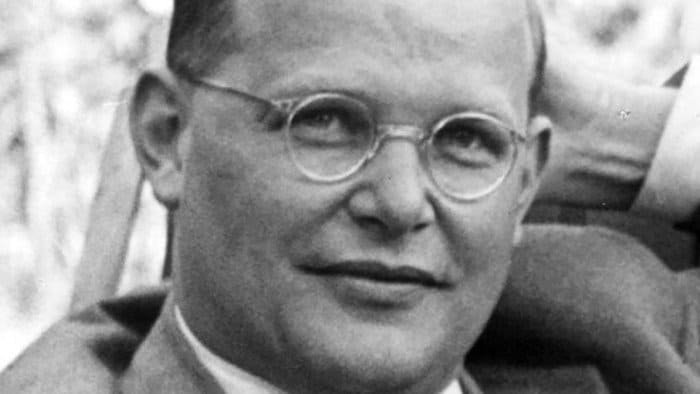
There are moments in history when standing firm in faith comes at a steep cost. For Dietrich Bonhoeffer, a German theologian and pastor during the rise of Nazi Germany, that cost was his life. Yet his legacy endures—not because he sought martyrdom, but because he refused to betray Christ in an age of compromise.
Bonhoeffer's witness isn't about choosing between political camps—it's about refusing to let any earthly power claim what belongs only to Christ. In times when institutions bend toward tyranny and the church negotiates its prophetic voice for cultural relevance, his life poses an urgent question: Will we follow Jesus even when following costs us everything?
A Theologian Forged in Crisis
Born on February 4, 1906, in Breslau, Germany (now Wrocław, Poland), Dietrich Bonhoeffer was raised in an intellectually vibrant household. His father, Karl Bonhoeffer, was one of Germany's most respected psychiatrists, and his mother, Paula, was a teacher from a family of theologians and artists. The Bonhoeffer home emphasized moral responsibility, classical education, and rigorous thought—a combination that would profoundly shape Dietrich's spiritual and ethical worldview.¹
From a young age, Bonhoeffer exhibited intellectual brilliance. He earned his doctorate in theology at the University of Berlin at just 21, and by 24, he was already lecturing in systematic theology. His early theological work, such as Sanctorum Communio (The Communion of Saints), was deeply rooted in Christ-centered community and ethical accountability. Yet it was in observing the crumbling moral structures of Germany during the Weimar Republic—and the rise of Hitler—that his theology became increasingly incarnational and prophetic.
When others saw political maneuvering, Bonhoeffer saw spiritual warfare. When others counseled accommodation, he demanded allegiance to Christ alone.
The Theology of Resistance
Christ Alone, Not Caesar
Bonhoeffer's resistance wasn't rooted in political ideology—it was rooted in the Lordship of Christ. When the German Evangelical Church aligned itself with Nazi racial ideology, he saw clearly what many refused to acknowledge: the church was bowing to Caesar.
In 1934, he helped launch the Confessing Church, an underground movement that rejected Hitler's interference and reasserted Christ's headship over the Church. Along with Karl Barth, he was a key contributor to the Barmen Declaration, which boldly stated:
"Jesus Christ, as he is attested to us in Holy Scripture, is the one Word of God whom we have to hear, and whom we have to trust and obey in life and in death."²
This wasn't abstract theology—it was a declaration of war against Christian nationalism. It meant the church belonged to Christ, not to the state, the nation, or any human authority.
The Cost of True Discipleship
As Nazi control tightened, Bonhoeffer's resistance grew bolder. He secretly trained seminarians for the Confessing Church in remote locations—an illegal act of discipleship. During this time, he wrote Life Together, a moving reflection on Christian community forged in resistance, and The Cost of Discipleship, where he articulated what genuine faith demands:
"When Christ calls a man, he bids him come and die."³
This wasn't melodrama. It was pastoral realism. Bonhoeffer understood that following Jesus in a world hostile to God's kingdom would always demand sacrifice. He wrote:
"Discipleship means allegiance to the suffering Christ, and it is therefore not at all surprising that Christians should be called upon to suffer."⁴
The German church had forgotten this. They wanted a Christianity of comfort, of national pride, of moral respectability without moral cost. Bonhoeffer called them back to the cross.
The Church for Others
One of Bonhoeffer's most convicting insights was his vision of what the church must be:
"The Church is the Church only when it exists for others… not dominating, but helping and serving. It must tell men of every calling what it means to live for Christ, to exist for others."⁵
This wasn't sentimental charity work. This was a fundamental redefinition of Christian identity in opposition to power. A church that exists for others cannot align with systems that exploit others. A church that serves cannot bless systems that dominate.
For him, the gospel could never serve the state—it could only serve truth, justice, and love as embodied in Christ.
From Words to Action: The Point of No Return
The Moral Crisis of Conscience
In 1939, while on a lecture tour in the United States, Bonhoeffer had the opportunity to stay and avoid Hitler's tightening grip. Friends urged him to remain safe. But within weeks, he returned to Germany. His reason was pastoral and profound:
"I must live through this difficult period in our national history with the Christian people of Germany. I will have no right to participate in the reconstruction of Christian life in Germany after the war if I do not share the trials of this time with my people."⁶
This is the conscience of resistance: the refusal to escape suffering that you might help bear witness in it.
By the early 1940s, Bonhoeffer was working with the Abwehr, a military intelligence agency with secret anti-Hitler elements. Through his brother-in-law Hans von Dohnanyi, he became involved in covert operations to smuggle Jews out of Germany and, eventually, in a plan to assassinate Hitler.
This was no easy decision. Bonhoeffer wrestled deeply with the ethics of violence, the weight of taking life to preserve life, the moral ambiguity of participating in assassination. But he believed that extraordinary evil demanded extraordinary response—even if it meant stepping into moral complexity for the sake of justice.
He wrote to a friend:
"We are not to simply bandage the wounds of victims beneath the wheels of injustice, we are to drive a spoke into the wheel itself."⁷
Costly Grace in Action
While imprisoned for his resistance, Bonhoeffer wrote some of his most profound theological reflections—later compiled into Letters and Papers from Prison. In these writings, he wrestled with themes of suffering, faith in exile, and what it means to follow Christ when institutions have failed.
His resistance wasn't theoretical. It cost him his safety, his freedom, and ultimately his life.
On April 9, 1945—just weeks before the Allied liberation of the Flossenbürg concentration camp—Bonhoeffer was executed by hanging. A witness to his final moments said:
"In the almost fifty years that I worked as a doctor, I have hardly ever seen a man die so entirely submissive to the will of God."⁸
Why His Witness Matters: The Call to Resist
When the Church Compromises
Bonhoeffer's life exposes a uncomfortable truth: the church is always tempted to compromise with power. Always tempted to trade prophetic witness for cultural relevance. Always tempted to confuse national identity with Christian identity, political allegiance with spiritual fidelity.
He watched it happen in Germany. The church didn't suddenly become Nazi—it slowly, incrementally, chose silence over truth, accommodation over resistance, comfort over costly grace.
"Silence in the face of evil is itself evil. Not to speak is to speak. Not to act is to act."⁹
This is the witness we need today. Not because our circumstances are identical to 1930s Germany, but because the spiritual dynamics are timeless: power corrupts, institutions compromise, and the faithful are called to resist.
The Conscience of the Beleaguered Believer
Bonhoeffer's theology speaks directly to those who feel spiritually homeless—believers who still love Jesus but feel exhausted by the church's entanglements with empire, nationalism, and the worship of power.
He reminds us:
"Christianity stands or falls with its revolutionary protest against violence, arbitrariness and pride of power and with its plea for the weak. Christians are doing too little to make these points clear rather than too much. Christendom adjusts itself far too easily to the worship of power. Christians should give more offense, shock the world far more, than they are doing now."¹⁰
This is not a call to be obnoxious or divisive for its own sake. It's a call to be so committed to Christ's upside-down kingdom—where the last are first, the weak are strong, the stranger is welcomed—that the world can't help but notice we're different.
Resistance as Faithfulness
Bonhoeffer never saw resistance as optional for Christians. When the church betrays its calling, when institutions demand allegiance that belongs only to God, when policies harm the vulnerable and Christians stay silent—resistance becomes faithfulness.
He wrote:
"We must learn to regard people less in the light of what they do or omit to do, and more in the light of what they suffer."¹¹
This is the heart of Christian resistance: to stand with those who suffer, to name injustice clearly, and to refuse to let the church bless what God condemns.
Living Bonhoeffer's Witness: A Call to Courage
1. Cultivate Undivided Allegiance
→ Christ or Caesar? The question never stops being relevant.
Every era carries the temptation to baptize culture in sacred language—confusing patriotism with piety, or equating national strength with spiritual blessing. Bonhoeffer refused to let God's name be co-opted for empire, and we must do the same.
"Politics are not the task of a Christian. The Christian has only one Lord, and that is Christ."¹²
Practical step: This week, identify one area where your political convictions have shaped your theology more than Scripture has. Bring it to prayer and trusted friends for examination. Ask: Am I serving Christ or justifying Caesar?
2. Embrace the Cost
→ Real discipleship will cost you something.
Bonhoeffer's choices stripped him of safety, reputation, and eventually his life—but he never saw courage as optional for Christians.
"Costly grace is the gospel which must be sought again and again, the gift which must be asked for, the door at which a man must knock. Such grace is costly because it calls us to follow, and it is grace because it calls us to follow Jesus Christ."¹³
Practical step: What conversation have you been avoiding because it might cost you socially or professionally? What relationship might suffer if you speak truth? Pray for courage, then step forward in faith. If you're never challenged, never at odds with the world's systems, perhaps you've stopped following the radical path of Christ (Luke 9:23).
3. Stand With Those Who Suffer
→ The church exists for others, especially the vulnerable.
Bonhoeffer didn't just preach resistance—he risked everything to shield the persecuted. Christian resistance always flows toward those being crushed by unjust systems.
"The test of the morality of a society is what it does for its children."¹⁴
Practical step: This week, take one concrete action to stand with the vulnerable:
- Contact your representatives about policies that harm the powerless
- Volunteer with organizations serving immigrants, refugees, or the marginalized
- Open your home to someone who needs refuge or encouragement
- Use your voice to amplify those being silenced
Faith that isn't lived out in love is just noise (1 Corinthians 13:1).
4. Support Prophetic Voices
→ Who is speaking truth where you've been silent?
In every generation, God raises prophets—pastors, poets, teachers, and ordinary believers—who speak uncomfortable truths. Often, they're dismissed as "radical" or "divisive." Bonhoeffer was one of them. So was Jesus.
"It is the nature, and the advantage, of strong people that they can bring out the crucial questions and form a clear opinion about them. The weak always have to decide between alternatives that are not their own."¹⁵
Practical step: Identify someone in your life or community who is calling the church back to its roots of compassion, justice, and cross-bearing love. Amplify their message. Defend them when others attack. Pray for them. Let them sharpen your conscience rather than soothe it.
5. Build Community in Resistance
→ You cannot resist alone.
Bonhoeffer's underground seminary, his work with the Confessing Church, his letters from prison—all testify to the necessity of community in resistance. Lone voices get crushed. Communities endure.
"The person who loves their dream of community will destroy community, but the person who loves those around them will create community."¹⁶
Practical step: Find or create a small group committed to costly discipleship—people who will pray together, study Scripture together, and hold each other accountable to follow Jesus into uncomfortable places. Don't settle for shallow fellowship. Build deep community that can weather storms.
Let's Walk This Out Together
Dietrich Bonhoeffer didn't set out to be a martyr. He set out to follow Jesus—with his intellect, his courage, his body, and his voice. What he found on that road was not ease, but fidelity. Not applause, but obedience.
His story challenges us because the spiritual dynamics he faced are timeless. In every age, the church is tempted to compromise with power. In every age, Christians must choose between Caesar and Christ. In every age, costly grace confronts cheap accommodation.
"Action springs not from thought, but from a readiness for responsibility."¹⁷
The forces that twist truth, silence conscience, and exploit religion for power still operate. But so does the Spirit of God—empowering ordinary people to resist compromise, to tell the truth, and to love boldly.
You don't have to be famous. You don't have to be fearless. You just have to be faithful.
And faithfulness, in times of institutional compromise, looks like resistance.
Call to Action
How is God asking you to stand, speak, or step forward right now?
- Share this reflection with someone who needs courage or who's struggling with the church's compromises
- Reflect deeply on where you've accepted accommodation and pray for the courage of costly grace
- Join the conversation using #ChristianResistance or #ChristAboveEmpire—your voice matters
- Explore related content: How Gospel Jesus confronts Empire Jesus and why the beleaguered believer's journey matters now more than ever
Let's walk the road of resistance together, one act of faithful courage at a time.
Footnotes
- Eric Metaxas, Bonhoeffer: Pastor, Martyr, Prophet, Spy (Nashville: Thomas Nelson, 2010), 10–12.
- The Barmen Declaration, Article 1, May 1934.
- Dietrich Bonhoeffer, The Cost of Discipleship, trans. R.H. Fuller (New York: Touchstone, 1995), 89.
- Ibid., 91.
- Ibid., 203.
- Metaxas, Bonhoeffer, 327.
- Dietrich Bonhoeffer, quoted in Geffrey B. Kelly and F. Burton Nelson, The Cost of Moral Leadership: The Spirituality of Dietrich Bonhoeffer (Grand Rapids: Eerdmans, 2003), 47.
- Eberhard Bethge, Dietrich Bonhoeffer: A Biography, trans. Victoria Barnett (Minneapolis: Fortress Press, 2000), 927.
- Attributed to Bonhoeffer; quoted in Metaxas, Bonhoeffer, 200.
- This extended quote appears in various Bonhoeffer collections; often cited from his lectures and correspondence compiled in The Way to Freedom.
- Dietrich Bonhoeffer, Letters and Papers from Prison, ed. Eberhard Bethge (New York: Touchstone, 1997), 17.
- Dietrich Bonhoeffer, No Rusty Swords: Letters, Lectures and Notes, 1928–1936, ed. Edwin Robertson (London: Collins, 1965), 244.
- Bonhoeffer, The Cost of Discipleship, 45.
- Often attributed to Bonhoeffer; reflects themes in Ethics regarding care for the vulnerable.
- Bonhoeffer, Letters and Papers from Prison, 5.
- Dietrich Bonhoeffer, Life Together, trans. John W. Doberstein (New York: Harper & Row, 1954), 26.
- Bonhoeffer, Letters and Papers from Prison, 38.
Related Reading: