When the State Asks the Church for Its Blessing
What does it mean to preach Christ when the government wants the church on its side? Not its silence—its endorsement. That was the harder version of the question in 1934, and it is the harder version now. A church that is being persecuted knows exactly where it stands. A church that is being flattered rarely does.
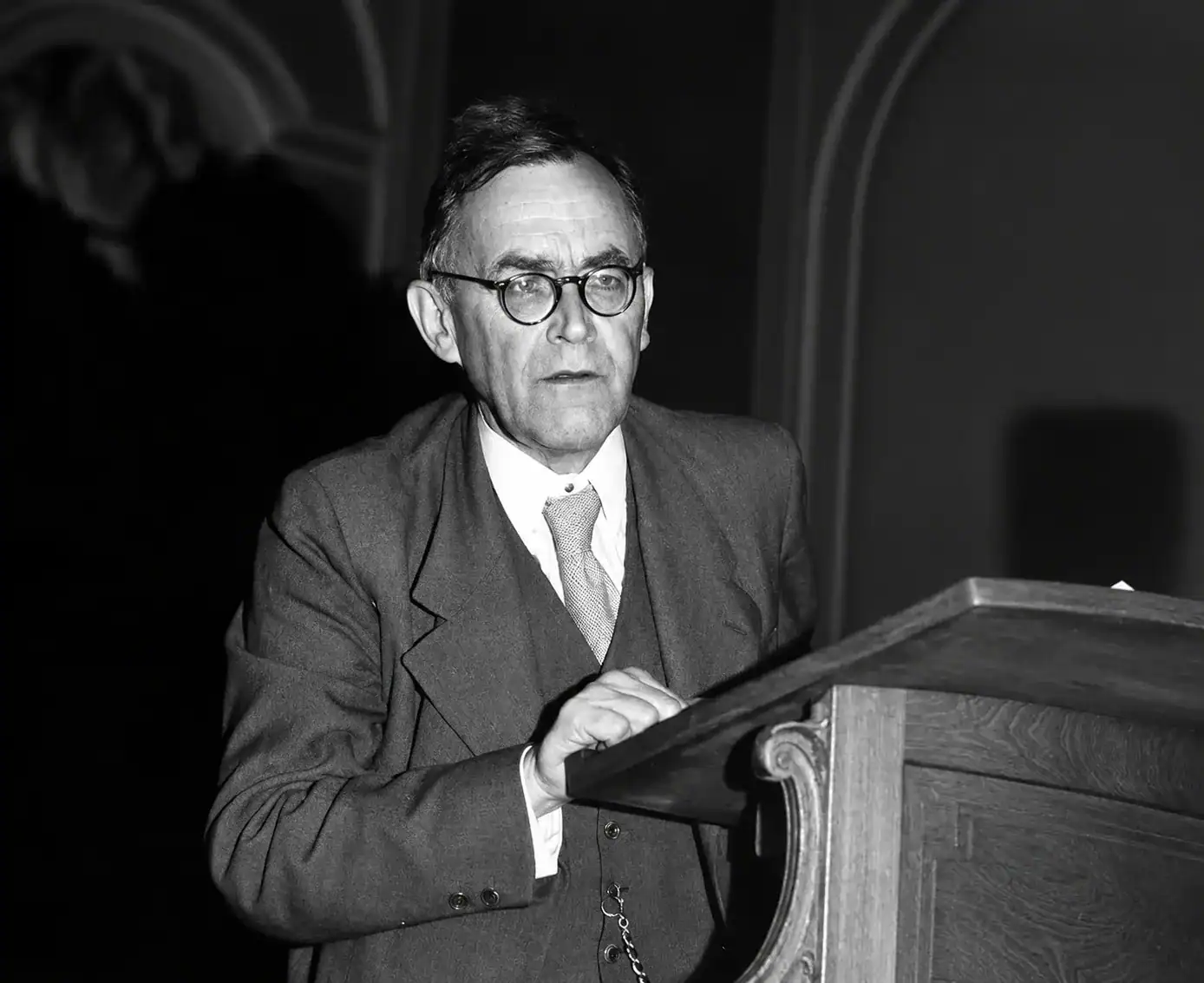
Karl Barth spent his life answering that question, and the answer cost him his professorship, his classroom, and his home in Germany. He was not martyred. He did not join a plot. That is precisely why his portrait belongs in this gallery—most of us will never face Bonhoeffer's choice, but many of us will face Barth's.
Who Was Karl Barth?
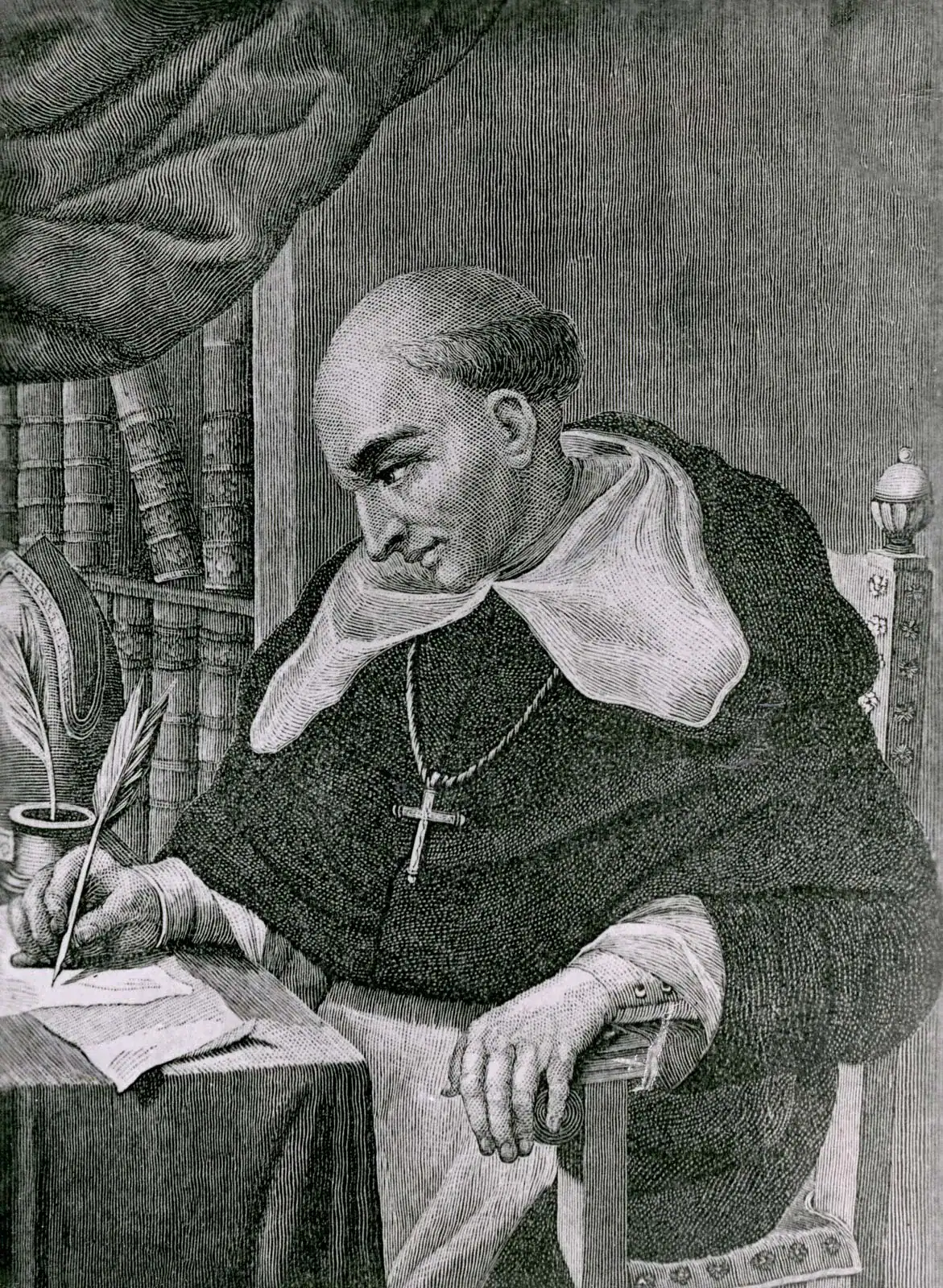
Karl Barth (1886–1968) was a Swiss Reformed theologian, the principal drafter of the 1934 Barmen Declaration, and the intellectual center of the Confessing Church's resistance to Nazi control of German Protestantism. He is widely regarded as the most significant Protestant theologian of the twentieth century, best known for his unfinished multi-volume Church Dogmatics. He refused to swear an unconditional oath of loyalty to Hitler, was suspended from the University of Bonn in November 1934, and was dismissed and expelled from Germany the following year.1
Anchor in the Word
Key Scripture Verse
But Peter and the apostles replied, “We must obey God rather than any human authority.”
Acts 5:29 (NLT)
Key Scripture Context
This is not a verse about rebellion. It is a verse about ceilings. The apostles in Acts 5 are not revolutionaries and they are not separatists. They have been arrested, released, and ordered to stop teaching in the name of Jesus. Their reply concedes that human authority is real and that they are under it—right up to the point where it demands something God has already forbidden.
Notice what they did not say. They did not declare the council illegitimate. They did not announce that God was on their political side. They identified a single point past which obedience stops, and they held it. That distinction—between rejecting authority outright and setting a limit on it—is the difference between a faction and a witness. It is also, almost exactly, the shape of what Karl Barth did in 1934.
What We're Facing
The Year His Theology Broke
Barth did not begin as a resister. He began as a promising student of the finest liberal theology Germany could offer, trained at Berlin, Tübingen, and Marburg under teachers he genuinely revered.
Then came August 1914. When ninety-three German intellectuals signed a public manifesto endorsing the Kaiser's war policy, Barth found the names of his own teachers on the list. The theology that had taught him to find God in human culture, human conscience, and human progress had just blessed a war.
For Barth that was not a political disappointment. It was a diagnosis. A theology that locates God inside the highest human ideals will bless whatever the culture is already doing, because it has no place to stand outside the culture.
He was pastoring at the time in Safenwil, a mill village in the Swiss canton of Aargau, where he served from 1911 to 1921. He took the side of the textile workers so consistently that the neighbors called him the Red Pastor. He also discovered, standing in that pulpit week after week, that he had nothing to say that the newspaper could not say better.
So he went back to Romans. The commentary he produced—Der Römerbrief, published in 1919 and radically rewritten in 1922—landed on the theology of the age like a bomb on a playground. His argument was blunt: God is not the ceiling of human aspiration. God speaks; we do not extract Him from our own best instincts. And that means the church always has ground to stand on that the state cannot own.
This is the part usually skipped, and it is the part that matters. Barth's stand in 1934 was not a sudden burst of political courage. It was the twenty-year-old conclusion of an argument he started in 1914. He saw the failure mode two decades before the failure arrived.
The Church That Bowed
By 1933 the failure had arrived and it had a name. The Deutsche Christen—the “German Christians”—were not a fringe sect. They were a popular movement inside German Protestantism that saw no contradiction between the gospel and National Socialism. They pressed the churches to adopt the leader principle in church government, to purge pastors of Jewish descent, and to treat race, blood, and national destiny as genuine sources of revelation alongside Scripture.2
Read that last clause again, because the whole thing hinges on it. They did not deny the Bible. They added to it. Hitler's rise was interpreted as a work of God in history—a second word from God, running parallel to Christ and getting louder every year.
Barth published Theological Existence Today! in June 1933 and made a response that still sounds strange to modern ears: he announced he would carry on doing theology, and only theology, as if nothing had happened. That was not detachment. It was the most aggressive available move. A church that will not adjust its message to the news is a church the regime cannot use and cannot ignore. The pamphlet circulated widely among German pastors until the authorities suppressed it.
What Was the Barmen Declaration?
The Barmen Declaration is a six-thesis theological statement adopted May 29–31, 1934, at the Gemarke Church in Barmen, in the city of Wuppertal, by 139 delegates from Lutheran, Reformed, and United churches. It rejected the claim that anything besides Jesus Christ could serve as a source of the church's proclamation, and it became the founding document of the Confessing Church.3
Barth drafted it. The often-repeated detail is true and worth keeping: while his Lutheran colleagues Hans Asmussen and Thomas Breit took an afternoon nap, Barth stayed at the table with strong coffee and a couple of cigars and wrote. Asmussen and Breit contributed, and the synod revised the text before adopting it, so sole author
overstates the case. Principal drafter is right, and Barth himself regarded the work as his.
Each thesis follows the same three-part shape, and the shape is the genius of it: a Scripture text, a positive confession, then a flat refusal—we reject the false doctrine. Roughly a thousand words total. No policy demands. No political program. No mention of Hitler by name.
That restraint was the strategy. Barmen did not argue that Nazism was bad politics. It argued that Christ has no co-authors
—that whatever else claims to speak for God, whether a movement, a nation, or a historical moment, is simply not God speaking. Strip away the second source of revelation and the German Christian project loses its footing entirely, without the church ever entering the political argument on the state's terms.
That structure is why Barmen outlived its moment. It shaped the Belhar Confession against apartheid in South Africa, and it remains the document Christians reach for whenever the church is being drafted into someone's cause.
Why Karl Barth Lost His Chair
Because he would not swear an unqualified oath of loyalty to Hitler—and the qualification he insisted on was one sentence long.
After Hitler merged the offices of chancellor and president in 1934, civil servants, professors included, were required to swear personal allegiance to him. Barth did not refuse outright. He offered to swear the oath provided he could add that his loyalty extended only as far as he could responsibly go as an Evangelical Christian.4
That was the entire dispute. He was willing to be loyal. He was not willing to be loyal without limit. The proposal was rejected. He was suspended from teaching at Bonn on November 26, 1934, tried before a disciplinary panel, convicted, and formally dismissed. By 1935 he had been put out of the country and had taken a chair at Basel, where he taught for the rest of his career.
Sit with the smallness of it. The regime never demanded that he renounce Christ. It demanded a signature without an asterisk. Barth understood that a loyalty with no stated ceiling is worship, and that the asterisk was the only thing standing between a professor and a chaplain to power.
What Faithful Resistance Is Not
The word only works if it still means something. If every disagreement counts as resistance, then nothing does—and the people actually paying a price lose the only word they had.
Partisanship is not resistance. A Christian conviction will sometimes align with a party's position. That alignment proves nothing either way. The question is which direction the authority runs: from Christ to the political situation, or from the political situation back to Christ, looking for an endorsement on the way out.
Commentary is not resistance. Barmen cost its signatories their careers and, for some, their freedom. Opposition that costs only your opponents something is not resistance; it is recreation. This is an uncomfortable test and it is meant to be.
Withdrawal is not automatically resistance. Sometimes leaving is the faithful act, and this site has said so plainly to those who left when the noise got too loud. But Barth did not go quiet in Basel. He wrote, preached, and kept naming things by name. Silence and stepping back are not the same move.
Being disliked is not evidence of faithfulness. Plenty of people are opposed because they are wrong, or unkind, or tiresome. Persecution is not a scoring system, and hostility is not a credential.
Barth's own record is not a clean model. He got the principle right and still failed people in front of him, which we will get to below rather than quietly leaving out.
Then and Now
In Barth's day, the capture of the church did not look like persecution. It looked like relevance. Pastors were being told that their faith mattered to the national project, that God was moving in the events of the hour, and that the church finally had a seat at the table. Very few people experience that as a threat. Most experience it as an answered prayer.
The German Christians did not empty the churches. They filled them. They did not remove the cross; they hung it next to something else and asked no one to choose. The mechanism was addition, not subtraction, which is why it was so difficult to name and why Barmen had to be written the way it was.
Today the venues have changed and the mechanism has not. When a political movement adopts Christian language, when a leader is described as anointed for a national moment, when a cause is preached as though disagreement with it were disagreement with God—the second source of revelation is back, and it is doing the same work. We have traced this same distortion in Two Different Christs: The Jesus of Scripture vs. The Jesus of Empire.
The church is rarely captured by force. It is usually captured by invitation. That is what makes Barth's small, technical, one-sentence refusal so much more useful to us than a dramatic one would have been.
A Better Way: The Test Barth Left Us
Barth's test was about sourcing, not sides. Four practical markers fall out of how Barmen actually worked, and they hold up remarkably well as a self-examination.
It names a false claim, not a false team. Barmen never mentioned Hitler. It rejected a doctrine. Naming a person lets everyone else off the hook and turns a theological problem into a tribal one.
It costs the person saying it something. Barth's cost him his chair. If a stand raises your standing within your own group, it may be true, but it is not yet a test of anything.
It would still be true if your side held power. A conviction that only activates against one party is a loyalty wearing theology as a coat. Apply it to the people you agree with and see whether it survives.
It has a ceiling written into it. Barth's added clause—only as far as I can go as a Christian—is the whole discipline in miniature. Every loyalty you hold should have one, stated in advance.
Practical Moves of Faith
1. Name the Second Voice
Barmen's target was a second source of revelation running alongside Scripture. Ask what has actually been forming your convictions this month—which voices, which feeds, which certainties arrived without a text under them. Name them specifically. Vague concern about the culture
costs nothing and changes nothing.
2. Write Your One Sentence
Barth's dissent was a single qualifying clause. What is yours? Where is the line past which your loyalty to a movement, a leader, a family expectation, or a church culture simply stops? Write it down before you need it. Nobody drafts that sentence well under pressure.
3. Test the Claim, Not the Person
Scripture calls us to test every teaching and every voice claiming to speak for God (1 John 4:1). Notice that the instruction is to test the spirits, not to catalog the failings of individuals. Attacking a person is easier and accomplishes less. Ask instead: what exactly is being claimed here, and on what authority?
4. Count the Cost Honestly
Barth lost a professorship. Most of us are risking a friendship, a job, a place at a family table, or standing in a congregation. Those are real losses and pretending otherwise helps no one. Name what a stand would actually cost you, then decide with your eyes open rather than drifting into silence and calling it prudence.
5. Ask God for Clarity Before Courage
Courage applied to a misreading does damage. Pray plainly: God, show me what is actually true here—then give me the nerve to say it.
Barth spent twenty years getting clear before the moment came that required him to be brave. The order matters.
Supporting Scriptures
- Romans 12:2 (NLT):
Don't copy the behavior and customs of this world, but let God transform you into a new person by changing the way you think.
Transformation begins upstream of behavior, at the level of what forms your thinking. This is the verse Barmen is built on, whether or not it says so. - Galatians 1:10 (NLT):
Obviously, I'm not trying to win the approval of people, but of God. If pleasing people were my goal, I would not be Christ's servant.
Paul frames approval-seeking not as a personality trait but as a rival allegiance. You cannot serve an audience and a Lord. - Isaiah 30:10 (NLT):
They tell the prophets, ‘Don't tell us what is right. Tell us nice things. Tell us lies.'
The demand for comfortable preaching comes from the congregation as often as from the state. Both produce the same silence. - Ephesians 5:11 (NLT):
Take no part in the worthless deeds of evil and darkness; instead, expose them.
Abstaining is the minimum. Scripture assumes there will also be something said out loud. - Matthew 10:28 (NLT):
Don't be afraid of those who want to kill your body; they cannot touch your soul.
Courage in Scripture is never nerve. It is arithmetic—a clear-eyed assessment of what a given power can and cannot actually take from you.
The Part We Shouldn't Skip
An honest portrait has to include the failures, or it is not a portrait. It is a poster.
Barmen said nothing about the Jews. It rejected a second source of revelation, which cut the theological ground out from under Nazi race doctrine. But it did not name the persecution already underway, and it did not condemn antisemitism outright. Dietrich Bonhoeffer had already identified the treatment of Jews as the decisive question in 1933. Barmen, in 1934, did not follow him there.
Barth knew it. Late in life, writing to Bonhoeffer's friend and biographer Eberhard Bethge, he admitted he had long felt guilty about it—that he had not made the Jewish question central or public, including in the declarations he himself composed. He offered the honest explanation that such a sentence would not have won the synod's agreement in 1934, and then refused to let himself use it as an excuse.5
That admission may be the most useful thing in this whole portrait. Barth got the principle right and still arrived late for the people it was supposed to protect. Correct theology, published on time, is not the same as showing up for a specific human being. It is possible to write the definitive statement against idolatry and still fail to walk across the street.
There is more, and it belongs here too. His critics note that he never denounced Soviet communism with the force he brought to Nazism. His household arrangement—his assistant and theological collaborator Charlotte von Kirschbaum lived with him and his wife Nelly for decades, a situation that strained everyone in it and that Barth never adequately justified—sits uneasily beside his moral clarity elsewhere.
None of this cancels Barmen. All of it is a reminder that God has consistently done His work through people who were not finished being wrong. If you are waiting to be unblemished before you say the true thing, you are waiting for a condition that has never once been met.
Let's Walk This Out Together
Resistance doesn't usually begin in protest. It begins in clarity. Barth chose truth over tenure, conviction over conformity, and a single qualifying sentence over a clean signature. He was fifty years old, comfortable, tenured, and internationally respected, and he wrote one clause that ended all of it.
He also spent the next thirty years working. Exile was not retirement: he wrote to the churches of occupied Europe, served in the Swiss auxiliary border guard in his fifties, preached regularly in the Basel prison—those sermons are among the warmest things he ever wrote—and kept building Church Dogmatics, which ran to four volumes across thirteen part-volumes, roughly six million words, and was still unfinished when he died in Basel on December 10, 1968. A man deported over one page of theology answered by writing thirteen thousand more.
If this reflection stirred something in you, don't bury it. But you don't have to put it in a comment thread either. The Faith Journal is a private space built for exactly this—honest writing, real prayer requests, and the questions you're not ready to say out loud yet. Free, private by default, no algorithm, no one telling you what your doubt means. Write it there. Share it only when and if you want to.
You can also keep walking through the gallery. Barth's younger colleague made the other choice and paid the other price: Dietrich Bonhoeffer: Faithful Unto Death. Or start from the beginning at Portraits In Christian Resistance.
Frequently Asked Questions About Karl Barth
Who was Karl Barth?
Karl Barth (1886–1968) was a Swiss Reformed theologian, the principal drafter of the 1934 Barmen Declaration, and a leading figure in the Confessing Church's resistance to Nazi control of German Protestantism. His major work is the unfinished Church Dogmatics, published between 1932 and 1967. He is generally regarded as the most significant Protestant theologian of the twentieth century.
Did Karl Barth write the Barmen Declaration?
He was its principal drafter, not its sole author. Hans Asmussen and Thomas Breit contributed to the draft, and the Barmen synod revised the text before adopting it on May 31, 1934. Barth wrote the bulk of it and regarded it as his work, but the finished declaration was a synodical document rather than a personal one.
Why was Karl Barth expelled from Germany?
He refused to swear an unconditional oath of loyalty to Hitler. He offered to swear it with one added condition—that his loyalty extended only as far as he could responsibly go as an Evangelical Christian. That proposal was rejected, he was suspended from the University of Bonn on November 26, 1934, and after a disciplinary process he was dismissed and required to leave the country.
Was Karl Barth executed like Dietrich Bonhoeffer?
No. Barth was a Swiss citizen and was deported to Switzerland in 1935, where he taught at Basel until 1962 and died in 1968. Bonhoeffer, a German citizen, remained in Germany, joined the conspiracy against Hitler, and was executed at Flossenbürg in April 1945. The two men shared a conviction and faced very different costs.
Did the Barmen Declaration condemn the persecution of Jews?
No, and this is its central failure. Barmen rejected any source of revelation besides Christ, which undercut Nazi race doctrine theologically, but it did not name antisemitism or the persecution already underway. Barth later wrote that he felt guilty for not having made that question central and public, including in the declarations he himself composed.
What is the difference between faithful resistance and political activism?
The difference is direction. Faithful resistance runs from Christ to the political situation; political religion runs from the political situation back to Christ, looking for an endorsement. Practically, faithful resistance names a false claim rather than a false team, costs the person making it something, would still be true if their own side held power, and states in advance where its loyalty stops.
What can Christians learn from Karl Barth today?
Chiefly this: the church is most easily captured not when the state silences it but when the state flatters it. Barth's refusal was small, technical, and one sentence long, which makes it a more realistic model than dramatic martyrdom for most believers. His later admission of what he failed to say is equally instructive.
Journaling Prompts: The Sentence You Would Add
These questions deserve more than a passing thought. Tap any prompt below and it will open in the Faith Journal, ready for you to write. It's free, private by default, and there are no comment threads—nobody reads what you write unless you decide to share it. If you'd rather use paper, use paper. The point is that the question gets an honest answer somewhere.
What is the one sentence you would add to any oath—the clause where your loyalty stops?
Write it out in full, as though you had to hand it to someone. Barth's ran to a single line. If you can't finish the sentence, that is worth knowing now rather than later.
Which voices have actually been forming your convictions this month?
Not which ones you'd list if asked—which ones got the hours. Name them honestly, then ask which of them arrived with a text underneath and which simply arrived.
Whose approval are you protecting when you stay quiet?
There is usually a specific face attached, not an abstract fear. Picture the person. Then ask what you believe would actually happen if you said the true thing in front of them.
Would your convictions still hold if the people you agree with held the power?
Take one belief you hold strongly about how leaders should behave and apply it, in writing, to your own side. Note where it stops fitting comfortably.
Where have you gotten the principle right and still arrived late for a person?
This was Barth's own confession at the end of his life. Be gentle here, and be specific. Naming it is not self-punishment—it is how the next one gets caught in time.
Footnotes
- Center for Barth Studies, Karl Barth: Biography (Princeton, NJ: Princeton Theological Seminary). ↩
- On the German Christian movement's treatment of race and nation as sources of revelation, see Susannah Heschel, The Aryan Jesus: Christian Theologians and the Bible in Nazi Germany (Princeton, NJ: Princeton University Press, 2008). ↩
- Evangelical Church in Germany (EKD), The Barmen Declaration. The synod met at the Gemarke Church in Barmen, Wuppertal, May 29–31, 1934, with delegates from Lutheran, Reformed, and United churches. ↩
- Barth's own account of the qualified oath, and the disciplinary process that followed his suspension on November 26, 1934, is recorded in Eberhard Busch, Karl Barth: His Life from Letters and Autobiographical Texts, trans. John Bowden (Philadelphia: Fortress Press, 1976). ↩
- Karl Barth to Eberhard Bethge, 1967, responding to Bethge's biography of Bonhoeffer. Barth acknowledged that Bonhoeffer had treated the persecution of Jews as the decisive question as early as 1933, and that he himself had long felt guilty for not making it central or public, including at Barmen. ↩