

When Questions Feel Like Cracks in the Foundation
What if the thing you've been taught to fear is actually one of the ways God draws you closer? Doubt and faith are rarely separated in the lives of real believers — yet doubt is treated like a defect.
Doubt has a reputation problem. It’s often treated like a defect—something to suppress, hide, or overcome as quickly as possible. But what if doubt is not the enemy of belief… but the beginning of something deeper, more honest, more real? Today’s reflection leans into a tension most people avoid: that certainty can quietly harden the heart, while doubt can open it.
Anchor in the Word
Key Verse
I do believe, but help me overcome my unbelief!—Mark 9:24 (NLT)
Key Scripture Context
This moment comes from a desperate father seeking healing for his son. He is not polished. He is not theologically precise. He is honest. His words hold both belief and doubt at the same time. And Jesus does not reject him for that tension. He responds to it.
That alone should stop us.
What We’re Facing
When Certainty Becomes a Wall
There is a quiet pressure in spiritual spaces to have everything nailed down.
To speak confidently. To never hesitate. To always “stand firm” in a way that leaves no room for questions.
But underneath that pressure is something deeper.
Fear of being wrong. Fear of losing control. Fear that if one piece falls, the whole thing collapses.
So we build certainty like a fortress.
We memorize the right answers. We defend positions. We become fluent in arguments.
And slowly, without realizing it, we stop listening.
The tragedy is not just intellectual. It is spiritual.
Because when certainty becomes rigid, it often produces a lack of compassion, a resistance to growth, a tendency to judge rather than understand.
Meanwhile, doubt—honest, searching doubt—is treated like betrayal.
Yet the father in Mark 9:24 stands in front of Jesus and says, in essence: “I’m not all the way there.”
And Jesus meets him there anyway.
Then and Now—Drawing Parallels
In the ancient world, belief was rarely neat and tidy.
People lived with constant uncertainty. War, famine, illness, political oppression—these were not abstract ideas. They were daily realities. Faith was not a system to master. It was a lifeline to hold onto.
The early followers of Christ did not walk in perfect clarity. They misunderstood Jesus repeatedly. They argued. They doubted. They scattered in fear.
Even after the resurrection, Thomas needed to see and touch before he believed. Jesus met him in that moment—but he also called him beyond it. Because you have seen me, you have believed; blessed are those who have not seen and yet have believed.
(John 20:29, NLT) Thomas was not cast out for his doubt. But he was invited into something more. As N.T. Wright observes, Thomas was not rebuked for his doubt itself, but for his insistence on a particular kind of evidence before he would believe.1 The distinction matters. Jesus is not indifferent to doubt—he is patient with it, and redemptive through it.
Today, we live in a different kind of instability. Not less real. Just different.
Information overload. Polarization. Endless voices claiming certainty.
Everyone is sure. Few are listening.
And in that environment, doubt feels dangerous. But maybe the real danger is something else.
Maybe the real danger is mistaking confidence for truth… and certainty for maturity.
Theological Truth in Plain Language
God is not threatened by your questions.
That needs to be said plainly.
The idea that doubt disqualifies you is not rooted in Scripture. It is rooted in control.
Throughout Scripture, we see people wrestle. Job questions God in the middle of suffering—If only I knew where to find him; if only I could go to his dwelling!
(Job 23:3, NLT)—and God does not silence him. David cries out in confusion and fear. The prophets wrestle with injustice and silence. None of them are dismissed for asking hard questions.
What matters is not the presence of doubt. It is the direction of the heart within it.
Are you walking away… or leaning in?
Scripture itself draws a distinction worth naming. The Greek word translated “doubt” in passages like Matthew 14:31 (distazo) means to waver—to stand in two places at once. It is different from willful unbelief (apistia), which involves a settled refusal to trust. Honest doubt wavers. It does not slam the door. That difference is not a technicality—it is the whole point.
There is a difference between cynical doubt and honest doubt. Cynical doubt closes the door. Honest doubt knocks.
As theologian Paul Tillich wrote, Doubt is not the opposite of faith; it is one element of faith.
2 Tillich understood that authentic faith does not require the elimination of uncertainty—it requires the courage to commit in the presence of it.
Certainty, on the other hand, can become dangerous when it replaces dependence.
When we believe we already see clearly, we stop seeking. When we stop seeking, we stop growing. And when we stop growing, we begin to drift—often without realizing it.
Practical Moves of Faith
Name the Questions You’re Afraid to Ask
Stop pretending they aren’t there.
Write them down. Speak them aloud. Bring them into the light.
Questions do not destroy belief. Hidden questions do.
Stay in the Tension Instead of Escaping It
There is a temptation to resolve everything quickly. Don’t.
Sit with the tension. Let it stretch you.
Growth rarely happens in comfort. It happens in the space where you don’t have all the answers yet.
Return to the Person, Not Just the Answers
It is possible to know a lot about God and still feel distant.
Instead of chasing explanations, return to presence.
Read slowly. Pray honestly. Speak plainly. “Lord, I don’t understand—but I’m still here.”
That kind of prayer matters.
Watch for Certainty That Produces Contempt
This is one of the clearest warning signs.
If your certainty is making you dismissive of others, quick to label, unwilling to listen—then something is off.
Truth does not produce contempt. It produces humility.
Ask for a Teachable Heart
Not a perfect one. Not an unshakable one. A teachable one.
“God, keep me open. Keep me honest. Keep me willing to be corrected.”
That prayer will take you further than certainty ever will.
More Light for the Journey
If you need wisdom, ask our generous God, and he will give it to you. He will not rebuke you for asking.—James 1:5 (NLT)
→ God invites questions. He does not punish them.
Show me the right path, O Lord; point out the road for me to follow. Lead me by your truth and teach me…—Psalm 25:4–5 (NLT)
→ The posture is not certainty. It is guidance.
Now we see things imperfectly, like puzzling reflections in a mirror, but then we will see everything with perfect clarity…—1 Corinthians 13:12 (NLT)
→ Partial understanding is not failure. It is the human condition.
Trust in the Lord with all your heart; do not depend on your own understanding.—Proverbs 3:5 (NLT)
→ The call is not to perfect understanding. It is to trust beyond the limits of what we can see.
It was by faith that Abraham obeyed when God called him to leave home and go to another land that God would give him as his inheritance. He went without knowing where he was going.—Hebrews 11:8 (NLT)
→ Abraham did not act after his uncertainty resolved. He acted within it. Faith and unknowing traveled together.
Let’s Walk This Out Together
Doubt is not the collapse of belief. It is often the doorway to a more honest one.
The goal was never to become someone who has no questions.
The goal is to become someone who keeps turning toward God within them.
Certainty can feel strong. But it can also become brittle.
Doubt can feel unsettling. But it can also become the place where something real begins.
Anne Lamott put it this way: Faith includes noticing the mess, the emptiness and discomfort, and letting it be there until some light returns.
3
So if you find yourself in that space—uncertain, questioning, unsettled—
You are not behind.
You may be closer than you think.
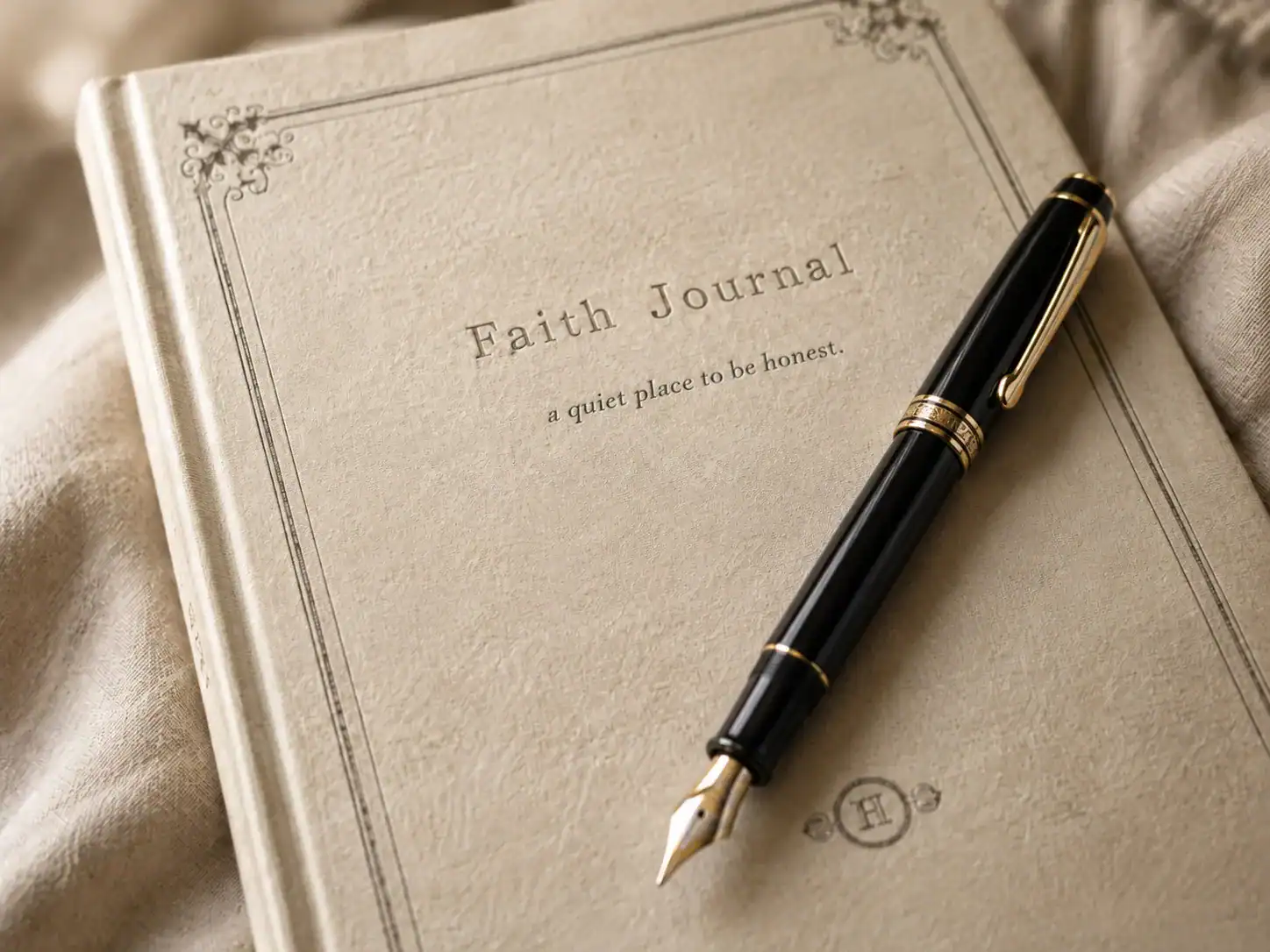
Journaling / Meditation Prompt: Holding Both
There is space for both belief and uncertainty in the same breath.
- What is one question you’ve been afraid to admit out loud? Sit with it. Not to solve it immediately, but to acknowledge it honestly.
- Where might God be inviting you to trust—not with full clarity, but with an open heart? Let that question lead you, not away—but deeper in.
Footnotes
1 N.T. Wright, John for Everyone, Part 2 (Louisville: Westminster John Knox Press, 2004), 154.
2 Paul Tillich, The Dynamics of Faith (New York: Harper & Row, 1957), 22.
3 Anne Lamott, Plan B: Further Thoughts on Faith (New York: Riverhead Books, 2005), 257.
Frequently Asked Questions
Scripture doesn’t treat doubt as sin. It treats it as a human reality. Job questioned God in anguish, David cried out in confusion, and a desperate father told Jesus directly “I believe—but help my unbelief.” Jesus responded to all of them. What matters isn’t the absence of doubt but the direction of your heart within it.
They’re not the same thing. Doubt (distazo in Greek) means to waver—to stand in two places at once. Unbelief (apistia) is a settled refusal to trust. One is a struggle. The other is a decision. Most people who feel like they’re losing their faith are actually just doubting—which means they’re still in the fight.
Watch the fruit. Healthy doubt asks hard questions but keeps turning toward God. It’s uncomfortable but not contemptuous. The warning sign is when doubt curdles into dismissiveness—when you stop asking and start mocking. If you’re still wrestling, that’s not distance. That’s engagement.
The entire book of Psalms suggests yes. Lament is a biblical genre. God is not fragile. He doesn’t need you to perform certainty you don’t have. Prayers like “Lord, I don’t understand—but I’m still here” are not weak prayers. They may be the most honest ones you’ve ever prayed.
Because certainty feels like control. When everything is settled, there’s nothing to fear. But that kind of certainty can quietly replace dependence on God with confidence in your own theological system. When the system feels threatened, the response is often defensiveness—not faith. Real trust doesn’t need a fortress.
Return to the person rather than the system. You don’t need to resolve every question before you can pray. Start there. Read slowly. Speak plainly. The goal isn’t to reconstruct perfect doctrine before re-engaging—it’s to keep your face turned toward Jesus in the middle of the uncertainty.