

And I will cause hostility between you and the woman, and between your offspring and her offspring. He will strike your head, and you will strike his heel.
(NLT)
Every road starts somewhere, and this one starts in a garden. Not a metaphor for something tidier — a place in the story where people and God were in the same room, unhurried, with nothing to hide. That's where it begins: not with rules, but with closeness.
And then the closeness breaks. Not in a battle. In a conversation. The first wound in the whole Bible isn't a wound to the body — it's a wound between people who trusted each other, and between them and the God who made them. Something gets said, something gets believed, and the easy nearness is gone. The gate closes behind them.
We're going to sit here at the start of the road for a while. Not to sort out who's most to blame for how it broke — the story is oddly uninterested in shaming anyone — but to look honestly at the loss, because most of us know that loss from the inside. And to notice the thing that's easy to miss: when it breaks, God doesn't walk away.
The first chapter is mostly gift. Light, water, sky, land, and then living things filling all of it — and people, made last, made on purpose, handed the care of the whole place (Genesis 1:26–28). Nothing here is grudging. It reads like someone making a home for someone they love.
The second chapter narrows the lens to a single garden. There's work to do, but it's good work — tending, keeping, naming. And there's a companion, formed so the first human wouldn't be alone, a partner and not a possession (Genesis 2:18–25). For a moment, everything is exactly as close as it was meant to be.
The third chapter is where it turns. A question gets asked — Did God really say…?
(Genesis 3:1, NLT) — and the question does its quiet work. It plants a suspicion: maybe God is holding out on you, maybe you're owed more than you've been given. They reach for what wasn't theirs to take, and the moment they do, something shifts. They feel exposed for the first time. They hide (Genesis 3:1–10).
God comes looking. Not to destroy them — to find them. There are real consequences named: pain, struggle, distance, a gate they can't walk back through. But even in the middle of naming what's broken, there's a line that points forward, and a final act that no one expects. We'll come to both.
Genesis wasn't written into a vacuum. The cultures around ancient Israel had their own accounts of how the world began, and most of them were bleak. In some, the world was pieced together from the body of a defeated god. In others, people were an afterthought — cheap labor made to do the gods' chores so the gods could rest. The gods themselves were moody and dangerous to be near (Sarna).
Genesis tells it almost as a deliberate answer to all that. People aren't a labor force or an accident; they're made on purpose, made to resemble God, and handed a garden instead of a workload. The God here doesn't create out of boredom or need. He makes the world the way you'd build something for someone you love.
The way the garden gets described — God walking in it, the sense that it's the one place where heaven and earth overlap — has led a lot of readers to notice that Eden looks less like a backyard and more like a sanctuary: the place where God and people are simply together (Walton). If that's right, then what's lost in the third chapter isn't mainly a piece of land. It's the nearness. The thing that breaks is the being-together.
Worth saying plainly, since this chapter has been fought over so hard: the opening of Genesis is told in the language of ordinary people standing under an ordinary sky, not as a technical account of how the machinery works. Calvin noticed this five centuries ago — that God speaks here in terms small enough for us to hold, meeting us where we stand rather than over our heads (Calvin). Read that way, the heartbreak of Eden was never an angry God catching someone in a rule violation. It reads much more like grief — the ache of a closeness that didn't have to end, ending.
Nothing here is forced. The whole turn starts with a suggestion — a question that makes you wonder whether the One who gave you everything is secretly keeping something back. That's a wound a lot of us carry without naming it: the low suspicion that God can't quite be trusted with the good stuff, that we'd better reach out and secure it ourselves. The reaching feels like freedom in the moment. It tends not to stay that way.
The instant it's done, something they'd never felt before floods in: exposure. What had been safe now feels dangerous. They cover themselves with leaves and step back into the trees. It's the oldest move there is — the sense that if anyone really saw us, all of us, we wouldn't survive the looking. So we manage what people get to see.
When God arrives, no one says I did this.
Adam points at Eve, Eve points at the serpent. The break between them and God spills sideways into the break between each other. That's how it tends to go: the distance we feel from God rarely stays put. It leaks into the rooms we share with everyone else.
In the middle of naming what's broken, God turns and says something strange and forward-leaning: that one of the woman's children would one day deal a fatal blow to the thing that wrecked everything (Genesis 3:15). It's quiet, almost buried in the wreckage. But the rest of the Bible keeps following that single thread — a child, a deliverer, eventually Jesus — back to this exact moment (Greidanus). The first hint that the story has somewhere to go is spoken before anyone has even left the garden.
Here's the detail it's easy to walk past. They had tried to cover themselves with leaves they stitched together — a small, frantic attempt to hide what they now felt. God doesn't mock the leaves. He replaces them, making them clothing from animal skins (Genesis 3:21), which means something had to die so they wouldn't have to stand there exposed. The very first thing God does after it all falls apart is not a lecture. It's a covering, made with His own hands, before the long walk out.
People have looked at that moment for a long time and seen the shape of something larger in it — a God who keeps covering what we can't fix ourselves, and who would one day do it at the steepest possible cost. Pink called it the first Gospel sermon, preached by God Himself, not in words but in symbol and action
(Pink). Whatever you make of that, the picture itself is gentle: the ones who hid get found, and the God they hid from dresses them for the road.
At the end of the chapter, God sets a guard at the way to the tree of life (Genesis 3:24). It reads like punishment, but there's mercy folded into it — to live forever locked inside that much brokenness would be its own kind of horror. So the way back is closed, for now. The Bible doesn't leave it closed. Much later it opens again through another tree entirely: a cross, on a hill, where the one this garden quietly promised takes the whole loss into himself. The road out of Eden, it turns out, was always pointed somewhere.
When God comes looking, the first thing out of His mouth isn't an accusation. It's a question: Where are you?
(Genesis 3:9, NLT). He knew where they were. You don't ask that to find out a location — you ask it to be answered, to open a door. God walks into the quiet after everything went wrong and, instead of indicting, calls out for them. The hiding didn't make Him leave. It moved Him to come closer.
We all have somewhere we go to not be seen — the version of ourselves we keep presentable, the subject we change, the distance we hold so no one gets close enough to find the thing we're sure would end us if it were known. The story doesn't shame that instinct. It notices it, the way a friend notices, and then it says the quietest thing: you can be found without being destroyed. Being seen here is not the same as being exposed.
There's a longing that tends to outlast our certainties — a sense of a home we can't quite get back to, that follows us even after we've walked a long way out. Augustine sat with that same restlessness a very long time ago and named it: you have made us for yourself, and our heart is restless until it rests in you
(Augustine). The invitation in this story isn't to perform your way back in. It's smaller and harder than that — to stop running long enough to be found.
The gate closes. That part is real, and the story doesn't soften it. A home is lost, and everyone who comes after carries some of that loss in their bones — every grief, every betrayal, every distance between people who meant to stay close has a thread running back to this garden.
But the leaving isn't the whole story, and it isn't the end of it. The same book that opens in a lost garden ends with God and people back in each other's company, at home again. And the turn happens, of all places, in another garden — at a tomb that doesn't stay full. What was lost outside Eden's gate gets answered there: not by pretending the loss never happened, but by going down into it and coming back up.
Redemption doesn't erase the broken gate. It doesn't hand you a tidy version of a story that was never tidy. It just refuses to let the gate be the last word. The oldest part of this story has something steady to say to anyone still on the long road out: the distance is real, it is not the end of you, and you were never walking it alone.
No right answers here. These are just for you and the page.
Where are you?If it were asked of you tonight, with no performance in it, what would you honestly say?
Where are you?— without rushing to fix the answer. Stay a little longer than is comfortable. Write down anything that surfaces.
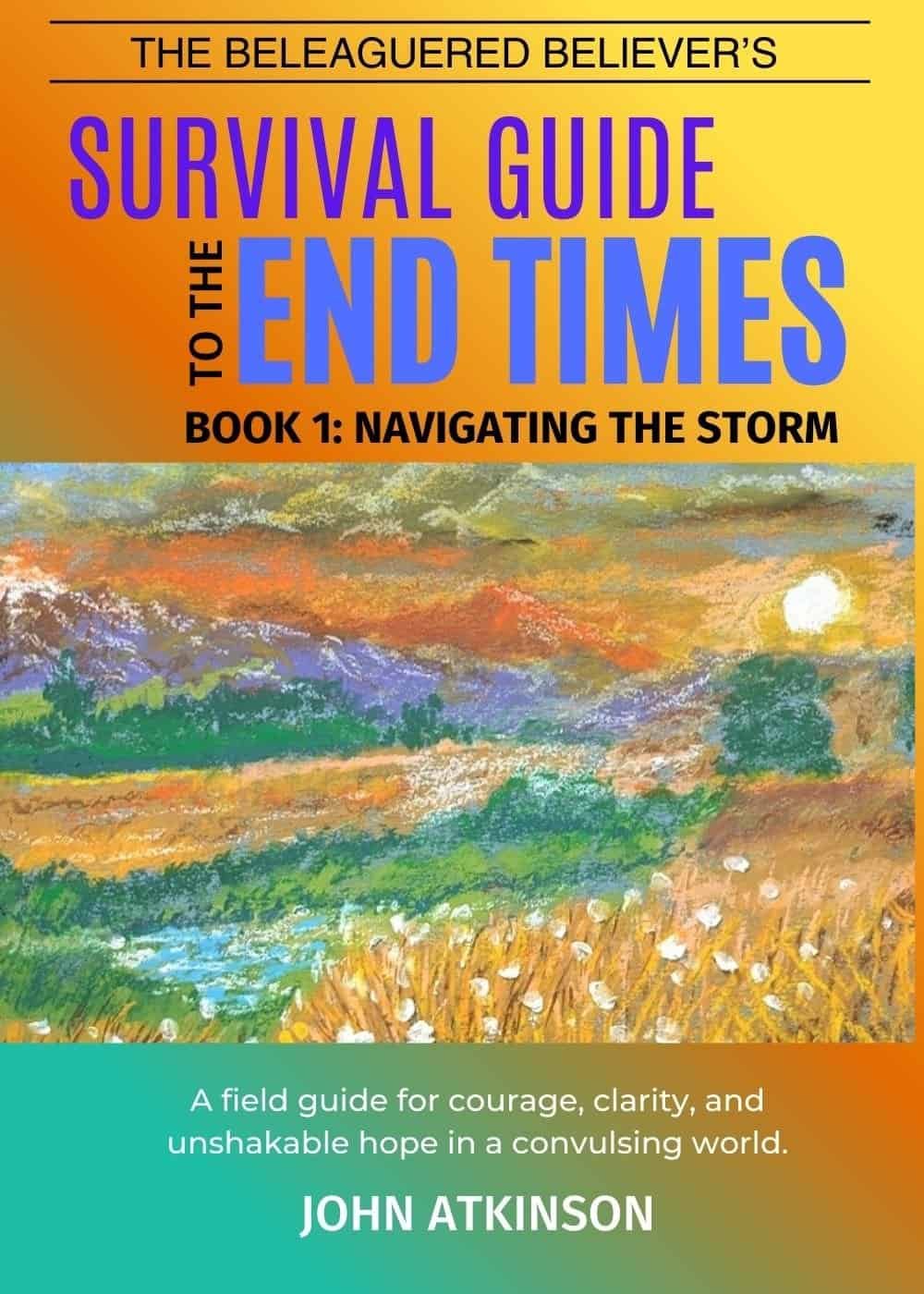
The Survival Guide for Beleaguered Believers is here—offering strength when systems fail, clarity whenlies spread, and hope that endures when the world seems out of control.
Don’t just survive the chaos—stand firm in Christ.
📖 Always free with Kindle Unlimited. Available in paperback and hardcover as well!

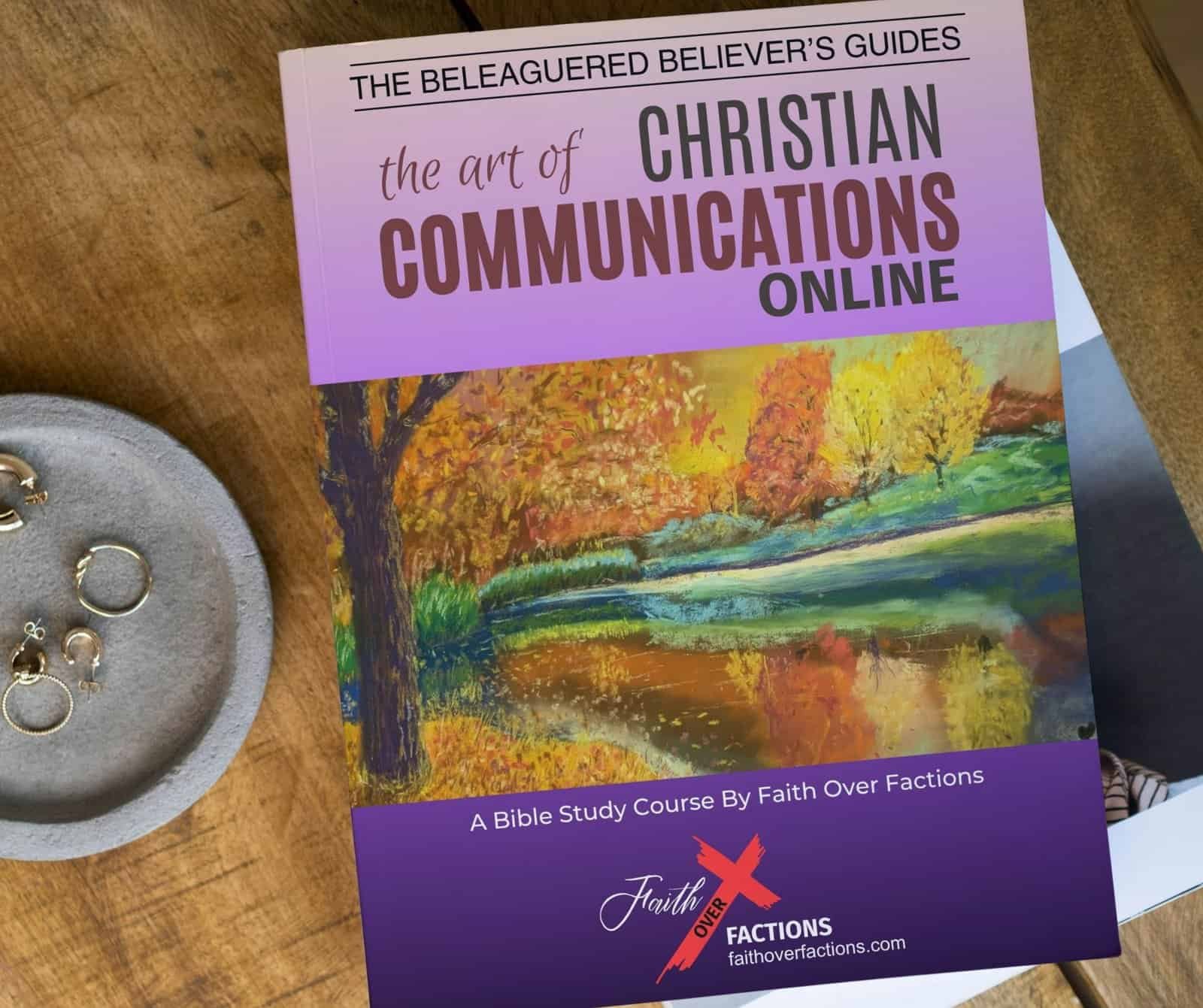
The Art of Christian Communications Online
Download The Art of Christian Communication Online—a free guide & workbook to help believers communicate with truth, empathy, and grace in every online conversation.
No email address required.
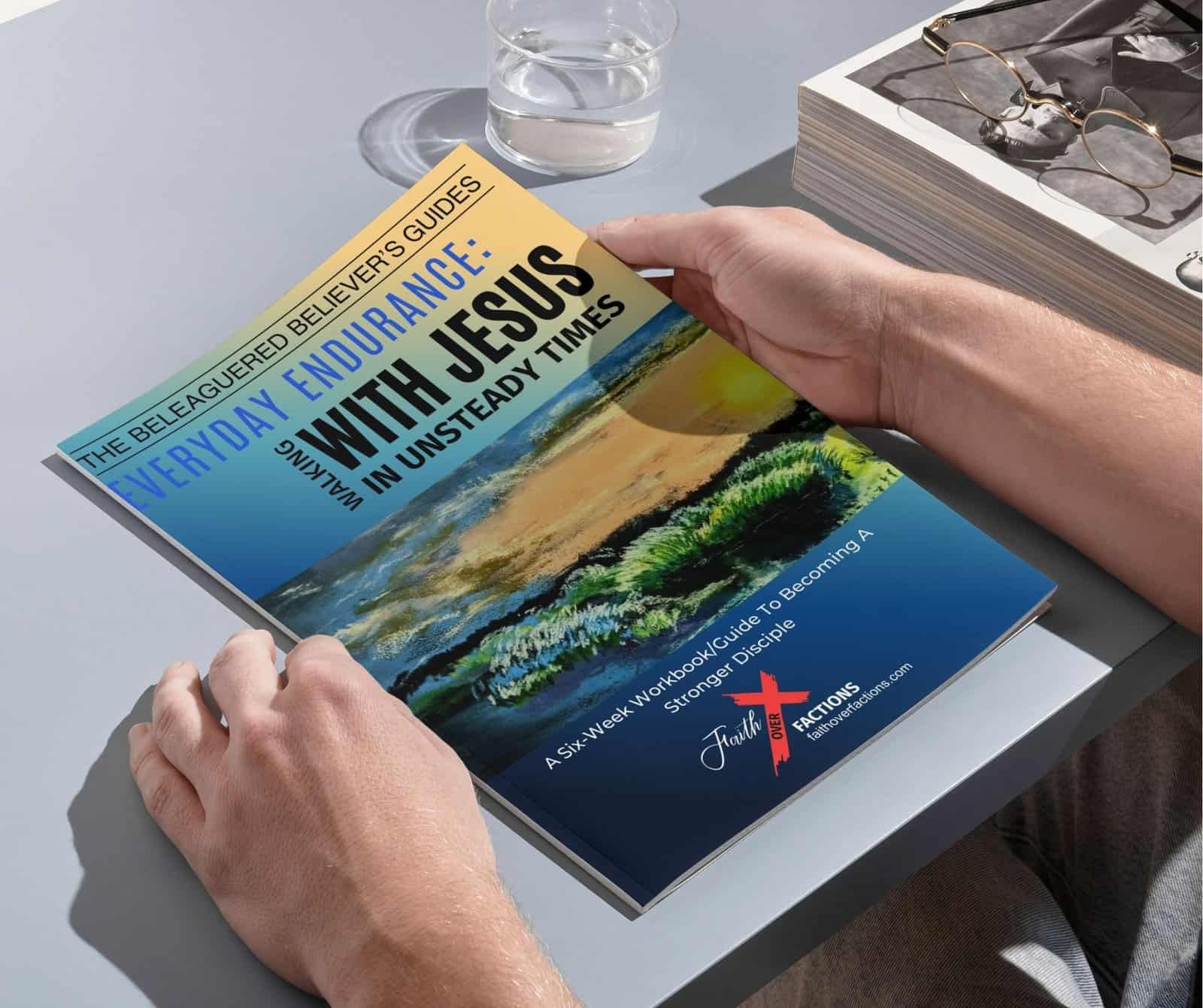
Find strength for weary days.
Download Everyday Endurance: Walking With Jesus in Unsteady Times
—a free devotional guide & workbook to help you build spiritual and emotional resilience through prayer, reflection, and daily trust in God.
No email address required
All Site Photography and Artwork Originals from John's wanders and studio unless noted.
Scripture quotations marked (NLT) are taken from the Holy Bible, New Living Translation, copyright © 1996, 2004, 2015 by Tyndale House Foundation. Used by permission of Tyndale House Publishers, Carol Stream, Illinois 60188. All rights reserved.
Scripture quotations marked (AMP) are taken from the Amplified® Bible,
Copyright © 1954, 1958, 1962, 1964, 1965, 1987, 2015 by The Lockman Foundation
Used by permission. www.lockman.org
We completely recommend E-Sword, a Free Study Bible available for most mobile and desktop platforms.