
Sin is crouching at the door, eager to control you. But you must subdue it and be its master.
Mile Marker 2 sets us down in the first home east of Eden — a household still carrying the weight of the fall, trying to raise children in a world that now resists them. Adam and Eve have survived the exile. They have found each other still. And now new life comes: Cain, then Abel. Two sons. Two altars. One story that will mark every generation that follows.
Genesis 4 is not simply the story of a murderer. It is the story of what happens when shame goes unanswered and envy finds a door left open. The wound begins not at the field but at the altar — in the gap between what was offered and what was received. That gap is familiar ground: the uncertainty of whether God sees you, whether your offering counts. This passage speaks directly into it, and it already knows your name.
This is scripture for the displaced. For anyone who knows what it feels like to carry a mark — not of honor, but of something harder — and to wonder whether God still speaks to people like that. He does. He always has. Genesis 4 is proof.
Cain and Abel both bring offerings to the Lord. Abel brings the firstborn of his flock — the best, given with open hands. Cain brings some of his crops
(Genesis 4:3, NLT). The distinction matters. God looks with favor on Abel's offering and not on Cain's (Genesis 4:4–5). The text does not explain the reason at length — but the pattern recurs across the canon: God sees the heart behind the gift.
Cain's response is rage. His face falls. God meets him there — not with punishment, but with a question and a warning: Sin is crouching at the door, eager to control you. But you must subdue it and be its master
(Genesis 4:7, NLT). The door is still open. The choice is still Cain's. He goes to the field and murders his brother.
Then comes the second great question of Genesis: Where is your brother? Where is Abel?
(Genesis 4:9, NLT). Cain's answer — Am I my brother's guardian?
(Genesis 4:9, NLT) — is the voice of every generation that has refused to answer for the harm it has done. The ground cries out. God does not ignore it. Cain is driven further east, marked, and sent into the land of wandering.
Cain builds a city. His descendants become the first craftsmen, musicians, and warriors (Genesis 4:17–22). Civilization rises — and with it, the boast of Lamech, who turns God's protection of Cain into a charter for personal vengeance (Genesis 4:23–24). The line of Cain is not irredeemably evil, but it is building without God at the center, and the cracks show.
Yet Genesis 4 refuses to end in blood. Another son is born to Eve — Seth, meaning appointed. And in the days of Seth's son Enosh, people first began to worship the LORD by name
(Genesis 4:26, NLT). The chapter that opens with a murder closes with prayer. That movement — from bloodshed to calling on the name of the Lord — is the first sketch of the entire redemptive arc.
In the ancient Near East, the firstborn son carried enormous social and religious weight. Primogeniture — the right of the firstborn — was not merely a family custom but an organizing principle of honor, inheritance, and status. For Cain, God's acceptance of Abel's offering over his own was not a mild disappointment. It was a public reversal of the expected order. His identity, his standing, his claim to divine favor — all of it suddenly felt erased.
The word translated sin in Genesis 4:7 is the Hebrew chattath, and the image of sin crouching (rovetz) at the door echoes the posture of a predatory animal lying in wait. Gordon Wenham notes that this may carry the sense of a demon crouching at the threshold — a resonance that would have carried real force for the ancient reader (Wenham 106). God is using language the ancient world understood: sin is not merely a bad habit. It is an adversarial power seeking mastery.
The mark of Cain (Genesis 4:15) has been catastrophically misread throughout history — most destructively as a racial mark, a reading the text nowhere supports. In context, the mark is protective. Bruce Waltke reads it not as a brand of shame but as mercy tempering judgment: God restraining the violence that would otherwise consume Cain in the lawless world beyond Eden (Waltke 98). It is a sign that Cain belongs to God's sphere of concern even in exile.
One more detail worth slowing down for: Abel. His name in Hebrew is Hevel — the same word translated vanity or breath in Ecclesiastes. His life is fleeting, his voice silenced early, his story told almost entirely in relation to his brother. He is the overlooked figure of the passage — and yet God sees him. His blood cries out and is heard. The one with no legacy, no city, no descendants named in the text — he is the one Scripture honors.
The first wound in Genesis 4 is not the murder. It is the unanswered longing to be seen and found worthy. Cain offers something and it is not received. That moment — the altar moment — is the hinge. Everything after grows from that unprocessed ache.
We do not know precisely why God did not look with favor on Cain's offering. The text invites us to sit with the ambiguity. What we know is what Cain did with the wound: he nursed it in silence, let it turn to rage, and when sin crouched at his door, he did not master it. He opened the door and let it lead him to the field.
This is the shape of a wound too many of us recognize. The feeling of invisible effort — of giving what we have and watching it go unreceived. The slow burn of comparison when someone else's offering is applauded and ours is not. The moment when disappointment begins to migrate from sadness into resentment, and resentment into something darker. Cain is not a distant villain. He is the person who did not know what to do with the gap between what he longed for and what he received.
And God meets him in that gap — before the murder, not after. Why are you so angry?
He asks. Why do you look so dejected?
(Genesis 4:6, NLT). The question is pastoral before it is judicial. God sees the wound beneath the rage and addresses it directly. Cain refused the invitation. But the invitation was real.
This passage also carries a word for anyone who has been exiled — pushed to the margins by failure, by consequence, by the weight of something they cannot undo. The road east is long. The mark Cain carries is not glory. But even there, God speaks. Even there, the exile is not beyond reach. That is not a comfortable word, but it is a true one.
The Christ-thread in Genesis 4 runs through Abel's blood, and the New Testament ties it explicitly. The author of Hebrews says we have come to Jesus and to the sprinkled blood, which speaks of forgiveness instead of crying out for vengeance like the blood of Abel
(Hebrews 12:24, NLT). That contrast — forgiveness instead of vengeance — is the whole sermon in a single verse. To feel its weight, we have to hear what Abel's blood was saying.
Abel's blood cried out for justice (Genesis 4:10). It did not cry in vain — God heard it and acted. But justice alone, in that moment, produced exile and a curse. What the blood of Abel could demand, it could not heal. It could name the wrong. It could not restore the brother, the family, or the ground soaked in grief.
Sidney Greidanus, tracing the redemptive-historical arc from Genesis forward, observes that Abel functions as a proto-martyr whose innocent suffering points the canon toward One who would also suffer unjustly — but whose death would accomplish what Abel's could not: reconciliation between the guilty and God (Greidanus 117). The pattern is not accidental. It is the grammar of the whole story.
Arthur Pink saw the connection plainly: Abel is a striking type of Christ, and his murder by Cain was a remarkable foreshadowment of our Lord's rejection and crucifixion
(Pink ch. 8). Pink traces even the motive. Envy slew Abel, and of Jesus he notes that it was through envy that He was delivered up to be crucified
(Pink ch. 8; Matthew 27:18). The same crouching thing that led Cain to the field led humanity to Golgotha. Where Cain shed blood and hid, Christ shed blood and was raised. Where Abel's cry demanded an answer, Christ's cross is the answer.
And the chapter's quiet ending carries its own Christ-thread. Edmund Clowney points out that the line of promise does not run through Cain the firstborn but through Seth, the son given in Abel's place — the son said to bear his father's image, the line in which true sonship will be realized. Luke traces the genealogy of Jesus straight through Seth to Adam, the son of God
(Luke 3:38, NLT; Clowney). The firstborn's claim fails; the overlooked line carries the Seed. God's redemption has never traveled by the routes human status expects.
Read this way, Genesis 4 is not a story about sin's inevitability. It is a story about God's relentless refusal to let even the guilty disappear. Every time the text shows God speaking to Cain — before the murder, after it, at the moment of exile — it is preparing us for a God who will, in the fullness of time, walk into the far country and speak to us there too.
The invitation from Genesis 4 is not simply don't be like Cain. It is far more specific: bring what is crouching at your door into the open before God, before it masters you.
Cain's warning is ours. The predator at the door does not announce itself as murder. It announces itself as disappointment. As comparison. As the quiet conviction that someone else is seen and you are not. Sin crouches in the gap between longing and receiving — and it is patient. It waits for the moment when the wound has been nursed long enough that the door swings open on its own.
God does not wait for us to have it under control before He speaks. He came to Cain before the crime. He comes to us the same way — before we have resolved our bitterness, before we have mastered the rage, before we have made ourselves presentable. The question He asked Cain is the question He asks us: Why are you so angry? Why do you look so dejected?
(Genesis 4:6, NLT).
You do not have to answer that question perfectly. You just have to stop walking toward the field.
And for those already east of Eden — already living in the consequences of what the door opened — the word is this: the same God who marked Cain for protection has marked His own with something more permanent. You are not beyond the voice. The exile is real, but it is not final. Christ has been to the far country. He knows the road. And He walks it back with us.
Genesis 4 gives us the first murder, the first exile, and the first city. It also gives us the first recorded prayer — people first began to worship the LORD by name
(Genesis 4:26, NLT). That is the movement the whole chapter is pressing toward: from blood on the ground to a name on the lips.
The road east of Eden does not begin with empires. It begins with an unanswered longing and a door left open. But it does not end there. Even in Cain's exile, God is not finished. Even in the line that produces Lamech's boast, God is threading Seth, threading Enosh, threading prayer back into the story. He is not waiting for the world to fix itself. He is already planting the seed of return.
We carry the wound of comparison. We know the slow burn of feeling overlooked. We know what it is to let a crouching thing through a door we should have kept shut. But we also carry something Cain did not yet have in full: the knowledge of the One whose blood speaks forgiveness instead of vengeance. The exile has a road home. The mark of mercy is deeper than the mark of guilt. And the God who called out in the garden — Where are you? — is the same God who, east of Eden, still calls.
Take these slowly. You don't have to answer them all. Let the one that stings stay with you.
Write honestly. Let God meet you not with the verdict you fear but with the same voice that came to Cain before the blood was shed — the voice that still asks, still waits, still speaks.
Clowney, Edmund P. The Unfolding Mystery: Discovering Christ in the Old Testament. 2nd ed., P&R Publishing, 2013.
Greidanus, Sidney. Preaching Christ from Genesis: Foundations for Expository Sermons. Eerdmans, 2007.
Pink, Arthur W. Gleanings in Genesis. Moody Press, 1922.
Waltke, Bruce K., with Cathi J. Fredricks. Genesis: A Commentary. Zondervan, 2001.
Wenham, Gordon J. Genesis 1–15. Word Biblical Commentary, vol. 1, Word Books, 1987.
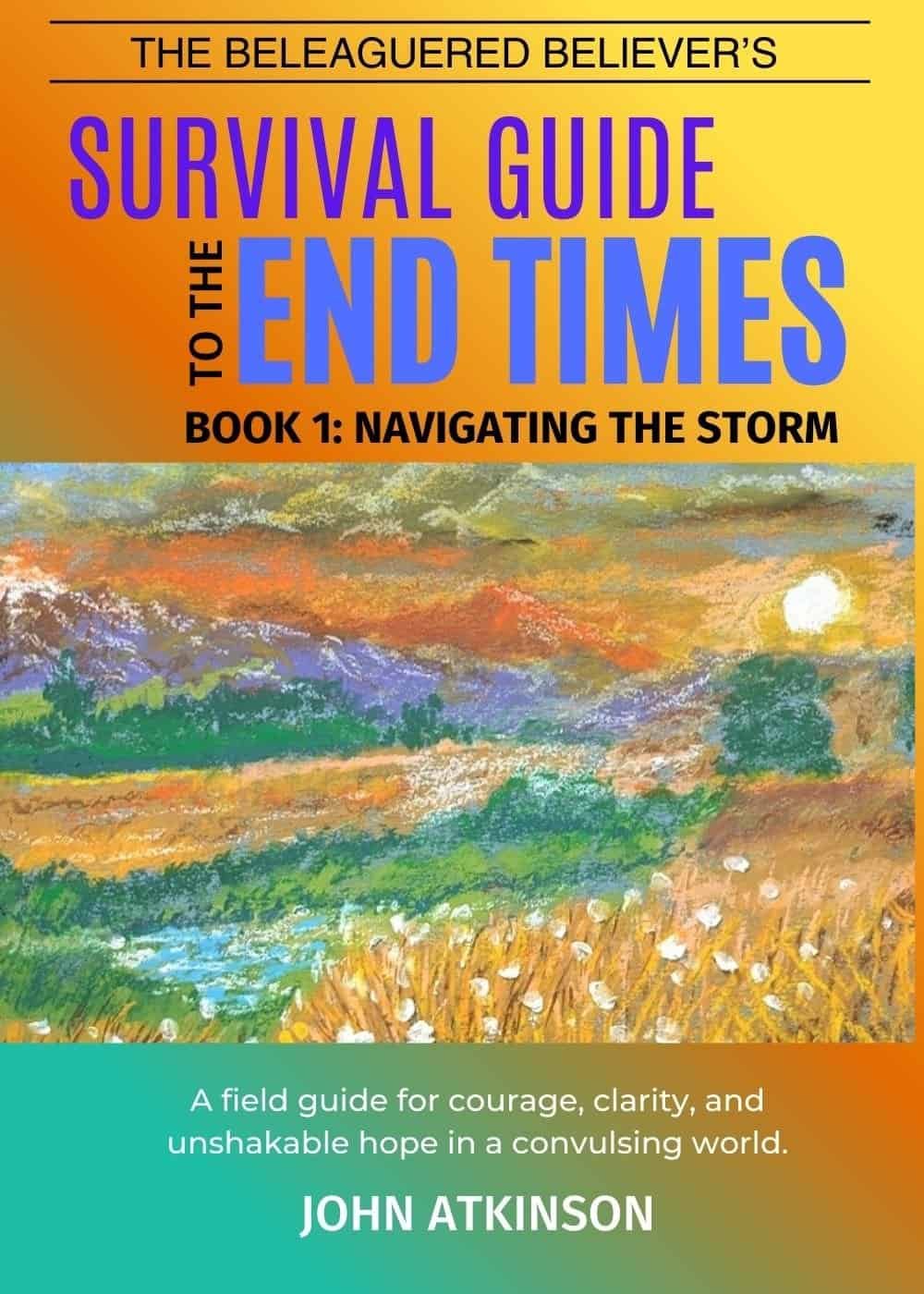
The Survival Guide for Beleaguered Believers is here—offering strength when systems fail, clarity whenlies spread, and hope that endures when the world seems out of control.
Don’t just survive the chaos—stand firm in Christ.
📖 Always free with Kindle Unlimited. Available in paperback and hardcover as well!

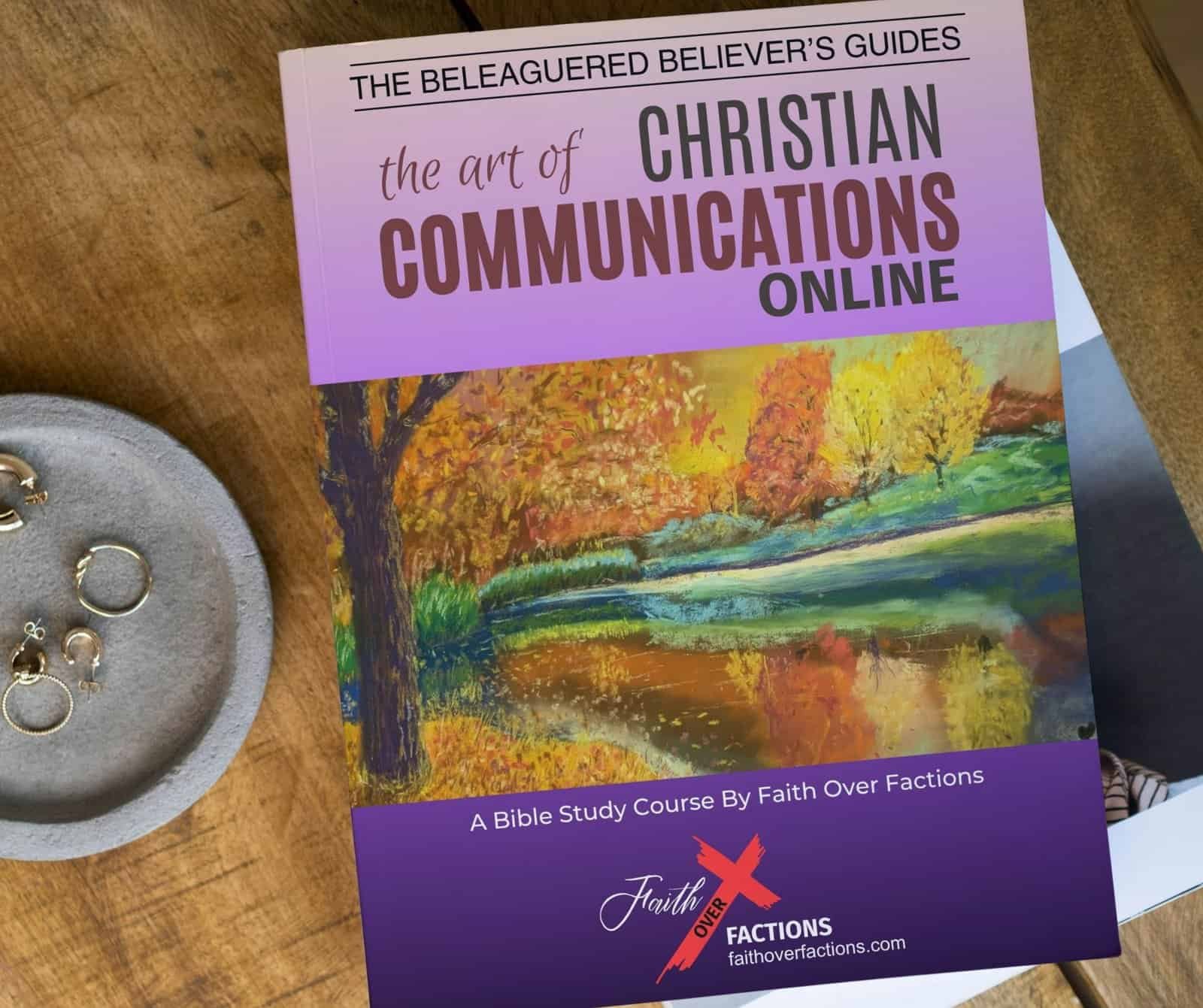
The Art of Christian Communications Online
Download The Art of Christian Communication Online—a free guide & workbook to help believers communicate with truth, empathy, and grace in every online conversation.
No email address required.
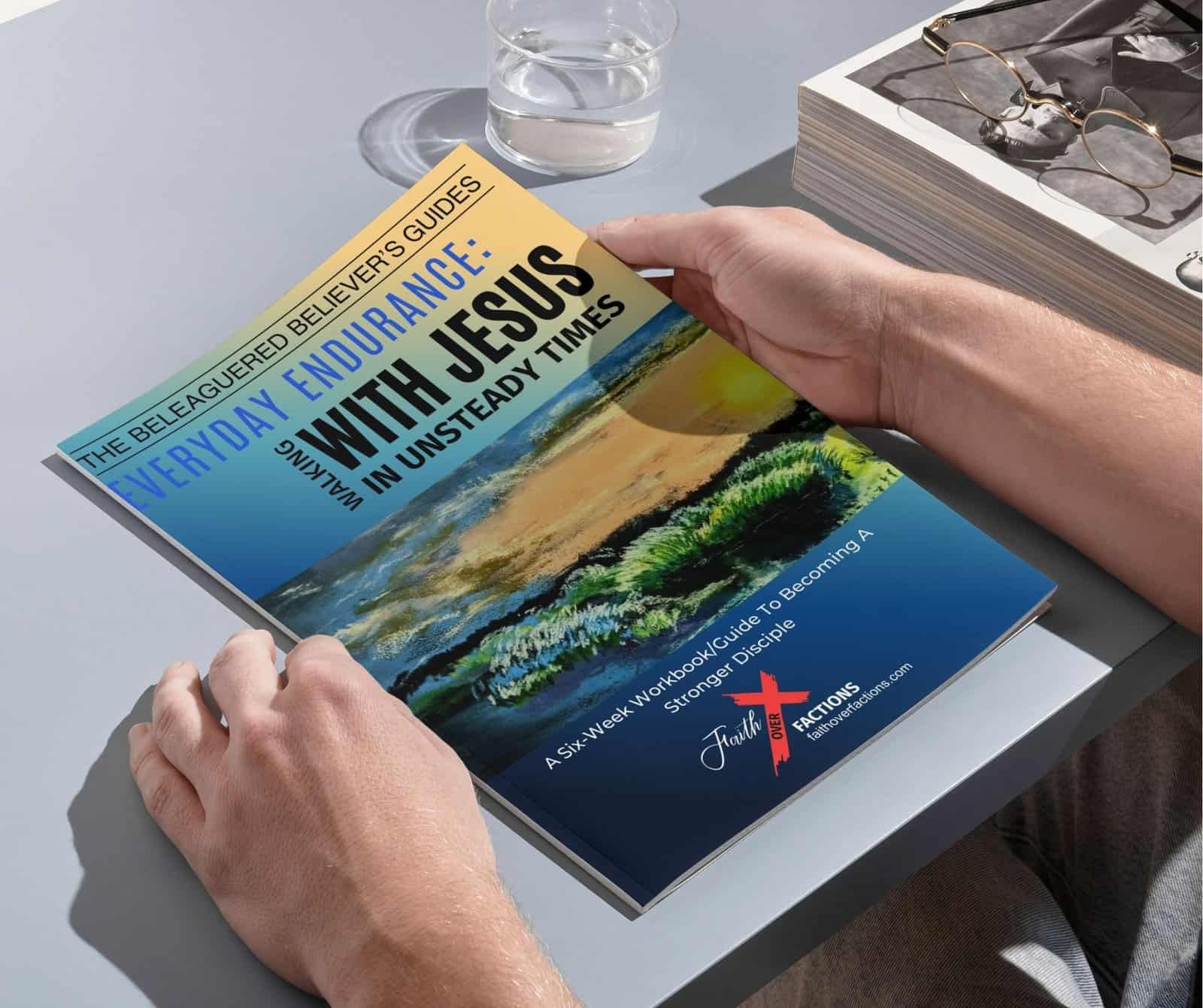
Find strength for weary days.
Download Everyday Endurance: Walking With Jesus in Unsteady Times
—a free devotional guide & workbook to help you build spiritual and emotional resilience through prayer, reflection, and daily trust in God.
No email address required
All Site Photography and Artwork Originals from John's wanders and studio unless noted.
Scripture quotations marked (NLT) are taken from the Holy Bible, New Living Translation, copyright © 1996, 2004, 2015 by Tyndale House Foundation. Used by permission of Tyndale House Publishers, Carol Stream, Illinois 60188. All rights reserved.
Scripture quotations marked (AMP) are taken from the Amplified® Bible,
Copyright © 1954, 1958, 1962, 1964, 1965, 1987, 2015 by The Lockman Foundation
Used by permission. www.lockman.org
We completely recommend E-Sword, a Free Study Bible available for most mobile and desktop platforms.