
“Come, let’s go down and confuse the people with different languages. Then they won’t be able to understand each other.”
(Genesis 11:7, NLT)Some roads are paved with ambition—and crumble under their own weight. Genesis 10–11 traces the rise of humanity’s first great city and the collapse of its proudest project: the Tower of Babel. At Babel, the desire to build becomes the desire to replace God. Language fractures. Unity shatters. The world scatters.
And notice what the story never says. It never says God hated the city, or the bricks, or the skill of the builders’ hands. What He interrupts is something quieter and more familiar: the decision to secure a name, a place, a future—with God left out of the plan entirely.
But even here, where pride is humbled and plans are undone, God is not absent. The scattering that looks like an ending turns out to be the road bending toward Abraham—and through Abraham, toward Christ. This Mile Marker invites us to consider: What are we building, and who are we building it for?
Genesis 10 lists the descendants of Noah’s sons and outlines the spread of nations after the flood. From these families come cities, languages, and cultures—each branch stretching outward across the known world (Gen 10:32). Then Genesis 11 seems to rewind: suddenly the whole earth speaks one language again. The chapters are not out of order by accident. Chapter 10 shows the scattered world we live in; chapter 11 goes back to explain how the scattering happened. Arthur Pink puts it plainly: these chapters show us the ways of men in this new world—in revolt against God and seeking to glorify and deify themselves
(Pink).
The people of the world, still united in speech, settle in Shinar and decide to build a city with a tower that will reach the heavens (Gen 11:1-4). Their motivation is spoken out loud: This will make us famous and keep us from being scattered all over the world
(Gen 11:4, NLT). Fame and safety. A name and a fortress. Everything the human heart still reaches for, stacked in brick.
God sees their unified ambition—not as innocent, but as dangerous. He confuses their language, and the building simply stops (Gen 11:5-9). Read that carefully: no fire falls. No tower is toppled. The text never records God destroying anything at Babel. He interrupts the speech, and the project dies mid-brick. As Matthew Henry observed, God has various means, and effectual ones, to baffle and defeat the projects of proud men that set themselves against him
(Henry). The judgment is real—and it is strangely gentle. They braced for wrath and received a question they could no longer answer together.
In ancient Mesopotamia, ziggurats—stepped temple towers—were built as staircases between heaven and earth. They were not just religious; they were political and cultural statements. To raise such a tower was to claim divine access on your own terms and announce your city’s dominance to every neighbor on the plain.
Even the city’s name carries the argument. In the Babylonian tongue, Babel meant the gate of God
—the place where heaven could be reached from below. But the Hebrew storyteller hears a different word in it: balal, confusion. Pink traces the reversal: the name that boasted of being heaven’s gate came to mean ‘Confusion’
after God’s judgment fell there (Pink). The city that named itself God’s doorway became a byword for babble.
The people of Babel weren’t just building tall—they were huddling. God’s command after the flood had been to fill the earth
(Gen 9:1, NLT), a blessing meant to carry His image into every corner of the world. Babel resists that calling. Instead of spreading, they settle. Instead of carrying God’s name outward, they pile up their own.
This is the first great faction in Scripture: one people, one language, one wall around themselves—an insider fortress built against the very future God had blessed. And God refuses it. The scattering is not merely punishment. It is a severe mercy that protects the world from unified rebellion—and it clears the ground for the calling of Abraham, through whom God will regather the nations rightly.
Pride. Fear. Control. Rebellion. The wound of Babel is not technological—it is spiritual. The tower is not a symbol of progress, but of a terror the builders admit in their own words: lest we be scattered. Underneath the ambition is the oldest human fear—the fear of being forgotten, of dissolving into the crowd, of a life that leaves no mark.
Calvin saw it clearly four centuries ago: This is the perpetual infatuation of the world; to neglect heaven, and to seek immortality on earth, where every thing is fading and transient
(Calvin). We still build this way. Careers as towers. Reputations as towers. Even ministries and families and theological camps as towers—structures meant to make our name permanent in a world where nothing is.
But control never heals insecurity. It only postpones the reckoning. And ambition, untethered from surrender, always collapses under its own weight. Babel shows us something harder still: that even unity—the thing we praise most—can become a force for rebellion when it gathers around the self instead of around God.
There is a quiet irony holding this story together: humanity builds its tower up toward heaven—and God still has to come down to see it (Gen 11:5). All that ambition, and the gap isn’t even close. But the coming down is the gospel hiding in the judgment. It is the direction the whole story of redemption moves. Humanity keeps climbing—through effort, achievement, religion, control. And God keeps descending.
Jesus, unlike the builders of Babel, does not climb toward heaven. He descends from it—to serve, to suffer, and to gather what pride scattered. Babel is the last time God comes down to halt human building. At Bethlehem He comes down to begin His own.
The prophets never forgot Babel. Zephaniah looks past the judgment to a promise that reads like the story played backward: Then I will purify the speech of all people, so that everyone can worship the LORD together
(Zeph 3:9, NLT). And at Pentecost the promise lands. The Spirit descends, and people from every nation hear the gospel in their own tongue (Acts 2:6).
Notice what God does not do. He does not restore one language. He does not erase the differences Babel created. He speaks through all of them at once—every tongue, every nation, gathered around a center none of them built. What pride broke, grace restores. Where Babel fragmented the nations, Christ draws them back together—not through bricks and towers, but through a cross. The scattered tongues of Genesis 11 end up around one throne, from every nation and tribe and people and language (Rev 7:9).
Genesis 11 asks us: What towers am I still building? Where am I trying to secure my name, my safety, my future—apart from God’s direction?
Control is always easier than trust. But it never leads to peace. Eventually, every tower not rooted in surrender cracks beneath its own ambition.
And here is the turn the story has been waiting for. One chapter after Babel, God speaks to a childless man from that same scattered world and says: I will make you into a great nation. I will bless you and make you famous, and you will be a blessing to others
(Gen 12:2, NLT). Read that against Babel’s slogan and it stops you cold. The exact thing they grasped at—this will make us famous—God gives to Abram as a gift. The name they tried to build, He simply bestows. Not as a trophy for the strong, but as a blessing meant to spill out onto every family on earth.
God still interrupts. Still scatters. Still calls. Not to destroy, but to invite us into something better: a story built not on our greatness, but on His grace. A name that is received, never constructed. He is not waiting at the top of anything you could build. He has already come down.
The tower stood tall—for a moment. Then God scattered its builders across the earth and let the bricks sit unfinished on the plain.
But the story does not end in confusion. It ends in a promise—just a few verses later—with the call of Abram. From the scattered nations, God will birth a blessing. From the ruins of pride, He will build a people of faith. And to a man who never asked for it, He will give the very thing Babel could not construct: a name that endures.
The road of redemption does not climb upward. It bends downward—through surrender, through trust, through the quiet laying down of bricks we were never meant to carry.
Reflection Questions:
Write honestly. Then take one area of life you are “building” and ask God if the foundation is surrender—or pride.
Works Cited
Calvin, John. Commentary on Genesis. Translated by John King, 1847. Christian Classics Ethereal Library, www.ccel.org/ccel/calvin/calcom01.html.
Henry, Matthew. Matthew Henry’s Concise Commentary on the Whole Bible. Public domain.
Holy Bible, New Living Translation. Tyndale House Publishers, 2015.
Pink, Arthur W. Gleanings in Genesis. 1922. Bible Believers, www.biblebelievers.com/Pink/Gleanings_Genesis/genesis_16.htm.
Not height—a name. The builders say it themselves: This will make us famous and keep us from being scattered all over the world
(Gen 11:4, NLT). The tower was fame and safety secured by human hands, with God left out of the plan. Genesis 10–11 tells the story of ambition trying to replace trust.
In the Babylonian language, Babel meant the gate of God
—the place where heaven could be reached from below. But the Hebrew storyteller hears the word balal, meaning to confuse. The city that called itself heaven’s doorway became a permanent byword for confusion (Gen 11:9).
After the flood, God told humanity to fill the earth
(Gen 9:1, NLT). At Babel they did the opposite—they huddled in one place to build one name. God confused their language to interrupt unified rebellion and scatter them into the future He had blessed. It was intervention, not abandonment—and it set the stage for the call of Abraham one chapter later.
The text never says so. No fire falls and no tower topples in Genesis 11. God confuses the builders’ speech, the project stops mid-brick, and the people abandon it (Gen 11:8). The judgment is real—but strangely restrained. God interrupted the building; He did not annihilate the builders.
Pentecost is Babel running in reverse. At Babel, one language becomes many and the nations scatter. In Acts 2, the Spirit descends and people from every nation hear the gospel each in their own tongue (Acts 2:6)—fulfilling Zephaniah’s promise that God would purify the speech of all people, so that everyone can worship the LORD together
(Zeph 3:9, NLT). God doesn’t restore one language; He speaks through all of them.
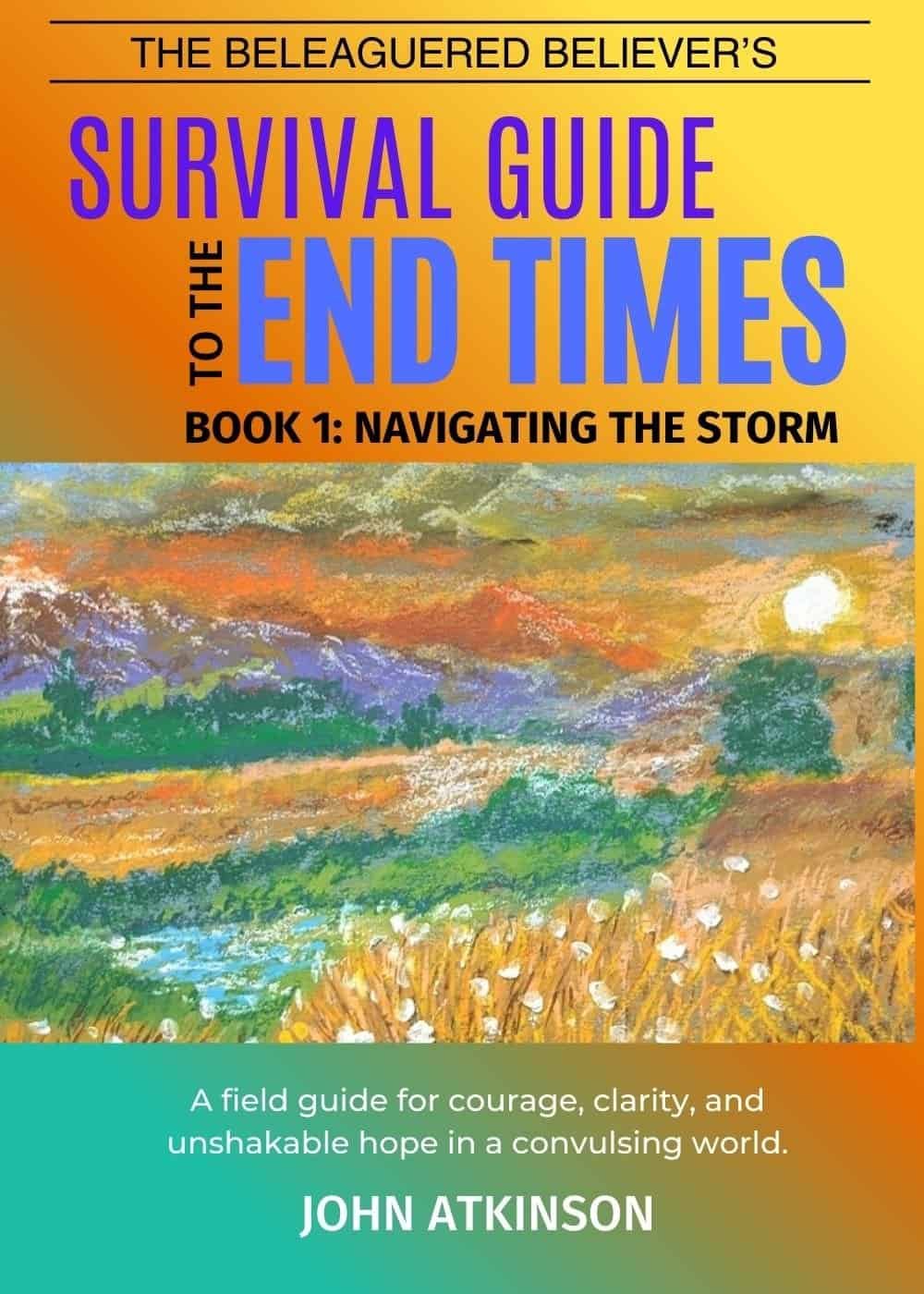
The Survival Guide for Beleaguered Believers is here—offering strength when systems fail, clarity whenlies spread, and hope that endures when the world seems out of control.
Don’t just survive the chaos—stand firm in Christ.
📖 Always free with Kindle Unlimited. Available in paperback and hardcover as well!


The Art of Christian Communications Online
Download The Art of Christian Communication Online—a free guide & workbook to help believers communicate with truth, empathy, and grace in every online conversation.
No email address required.
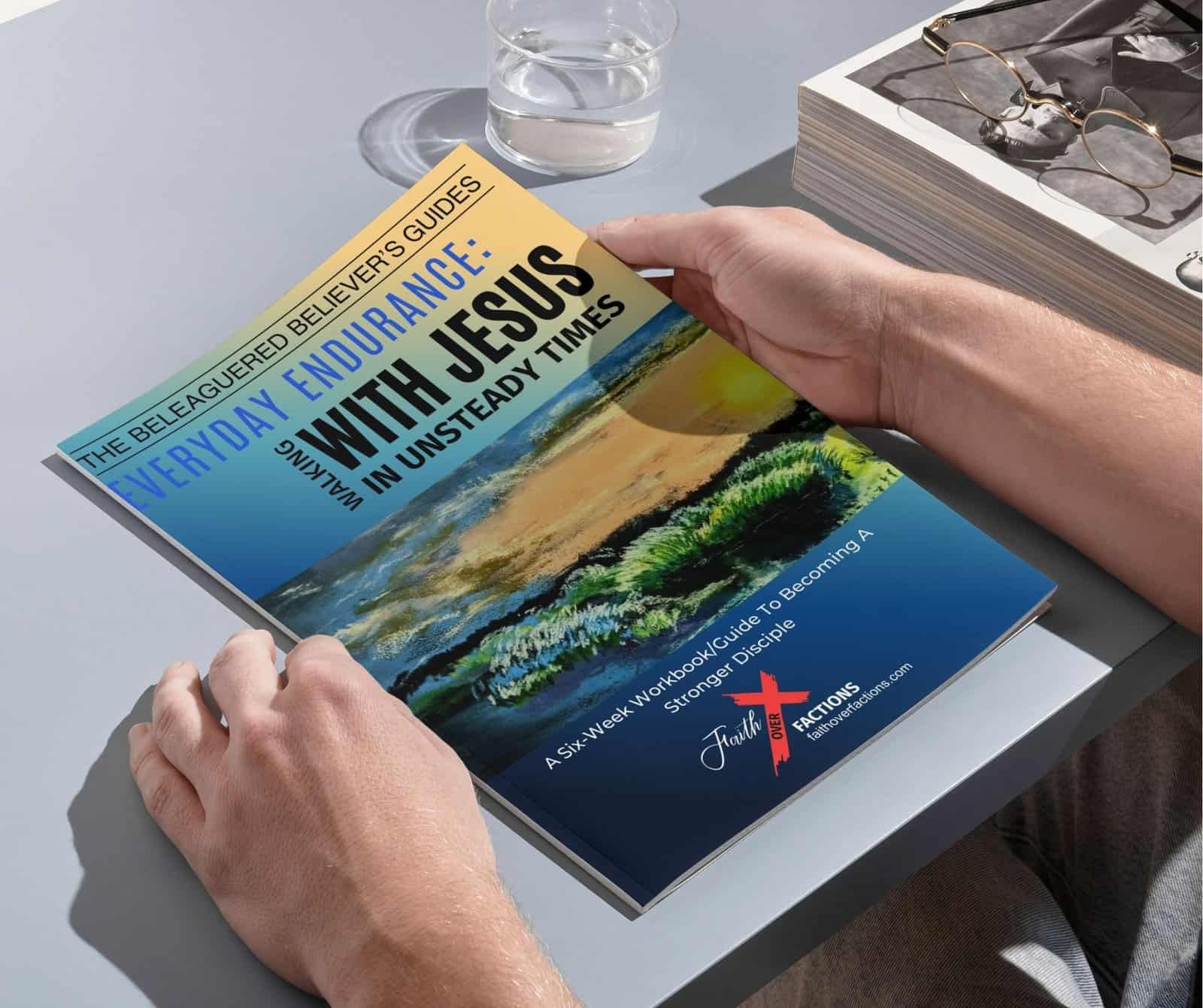
Find strength for weary days.
Download Everyday Endurance: Walking With Jesus in Unsteady Times
—a free devotional guide & workbook to help you build spiritual and emotional resilience through prayer, reflection, and daily trust in God.
No email address required
All Site Photography and Artwork Originals from John's wanders and studio unless noted.
Scripture quotations marked (NLT) are taken from the Holy Bible, New Living Translation, copyright © 1996, 2004, 2015 by Tyndale House Foundation. Used by permission of Tyndale House Publishers, Carol Stream, Illinois 60188. All rights reserved.
Scripture quotations marked (AMP) are taken from the Amplified® Bible,
Copyright © 1954, 1958, 1962, 1964, 1965, 1987, 2015 by The Lockman Foundation
Used by permission. www.lockman.org
We completely recommend E-Sword, a Free Study Bible available for most mobile and desktop platforms.