
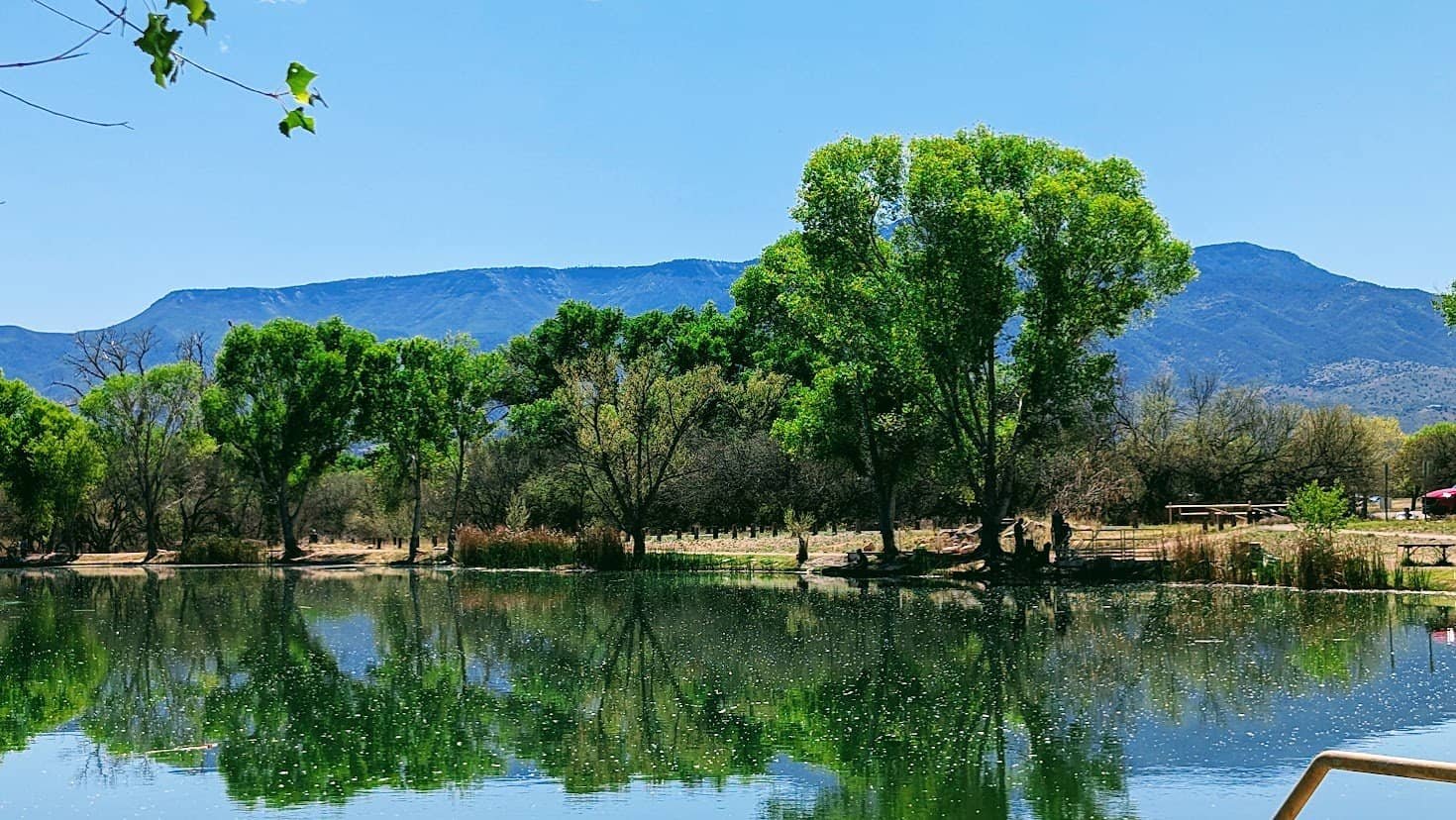
So Abram departed as the LORD had instructed, and Lot went with him. Abram was seventy-five years old when he left Haran.
The call of Abram is the first word God speaks after Babel—and He speaks it to one man, in a city full of other gods, with nothing to back it up but His own voice. Genesis 11 closed on a scattered, name-hungry humanity and a family that started for Canaan and settled instead at Haran. Genesis 12 opens with three words that dismantle a life: Leave your native country, your relatives, and your father’s family, and go to the land that I will show you.
(Genesis 12:1, NLT)
Calvin noticed how the command is stacked—country, then kindred, then father’s house—and refused to call it repetition. Abram is still more deeply affected, when he hears that he must renounce his kindred and his father’s house
(Calvin). God is not padding a sentence. He is naming, one layer at a time, everything that will have to come loose. Calvin saw the purpose in it, too: God thus tries all their affections, that he may not leave any lurking-places undiscovered in their hearts
(Calvin).
And Abram stalled. He got as far as Haran and stopped, and Scripture records nothing while he was parked there—no vision, no altar, no word. Spurgeon read that silence as the sharpest thing in the chapter: God spoke not to his servant in Haran: neither dream, nor vision, nor voice came to him in the place of hesitancy
(Spurgeon, Sermon 2011). It took his father’s death to break the tie. The road resumed at a graveside.
Some of us are reading this from somewhere we never planned to be—outside the church that raised us, outside the family that assumed we would stay, outside the version of faith we were handed at the door. Abram spends these three chapters as a resident alien. He builds altars on ground he does not own. He gets things badly wrong. He is not, in this stretch, rewarded with arrival. He is given a promise and a road.
This Mile Marker asks what it costs to answer—and what it quietly costs not to.
God calls Abram out of Ur and away from his people, attaching to the command a promise with a startling reach: All the families on earth will be blessed through you.
(Genesis 12:3, NLT) The blessing is aimed through Abram, not stored in him. He obeys—late, and partially—and crosses into Canaan as far as Shechem, where God appears and promises the land to his descendants. Abram builds an altar there, then another between Bethel and Ai. He is worshiping in a country that already belongs to somebody else (Gen 12:1–9).
Then he drifts south into the Negev, and famine turns drift into flight. In Egypt, fear rewrites his ethics: he presents Sarai as his sister, and she is taken into Pharaoh’s household. God intervenes with plagues on Pharaoh’s house because of Sarai, and Abram is escorted out of Egypt—rebuked by a pagan king, richer than he arrived, and smaller than he was (Gen 12:10–20).
Back in Canaan, the wealth Abram carried out of Egypt becomes the friction that splits the household. Herdsmen quarrel; the land cannot hold both men. Abram, the elder with every customary right of first choice, hands the choice to Lot. And watch what Lot sees: The whole area was well watered everywhere, like the garden of the LORD or the beautiful land of Egypt.
(Genesis 13:10, NLT) He chooses something that looks like Eden and looks like Egypt—the paradise we lost and the country his uncle just failed in—and pitches his tent toward Sodom (Gen 13:1–13). Only after Lot is gone does God tell Abram to lift his eyes and walk the length and breadth of the land, and Abram builds a third altar at Mamre (Gen 13:14–18).
Genesis 14 widens to geopolitics. Five city-states of the Jordan basin had been vassals of an eastern coalition for twelve years; in the thirteenth they rebelled, and in the fourteenth the coalition came to collect. The rebel kings are routed in the Valley of Siddim, a basin pocked with tar pits that swallow the retreat. Sodom and Gomorrah are stripped, and the captives are marched north—Lot among them (Gen 14:1–12).
A survivor reaches Abram, and here Scripture uses a word for the first time in the Bible: But one of Lot’s men escaped and reported everything to Abram the Hebrew, who was living near the oak grove belonging to Mamre the Amorite.
(Genesis 14:13, NLT) Mamre, Eshcol, and Aner are named as his allies—Canaanite chieftains bound to him by treaty. Abram mobilizes 318 men born into his own household, pursues the coalition as far as Dan, splits his force for a night attack, and chases the survivors past Damascus. He recovers the goods, the people, the women, and Lot (Gen 14:14–16).
On the road home two kings meet him. The king of Sodom offers him the plunder. Melchizedek, king of Salem and priest of God Most High, brings out bread and wine and blesses him. Abram gives Melchizedek a tenth of everything and tells the king of Sodom he will not take so much as a thread—while insisting, in the same breath, that his Amorite allies receive their full share (Gen 14:17–24). The chapter ends with a man who has just won a war owning nothing but a promise.
Ur and Haran were both major centers of moon-god worship—two ends of a well-traveled trade route bound by the same devotion. Abram is not summoned from religious emptiness into religion. He is summoned out of a functioning, prestigious, well-funded religious system into a landscape with no temple, no priesthood, and no institution. Everything he builds, he builds himself, out of field stones, on land belonging to somebody else. Pink read the timing as deliberate: after Babel, Having dealt in judgment (at Babel) God now deals in grace
(Pink).
Abram’s first altar goes up at Shechem, beside the oak of Moreh. The name is not decoration. Pink glossed the pair plainly: Shechem signifies shoulder
, the place of strength, and Moreh means instruction
(Pink)—and a named teaching-tree in Canaan almost certainly marked a site where locals came for oracles. Abram does not clear it, curse it, or avoid it. He builds an altar to the LORD in the exact spot where the neighbors went to hear from their gods. His second altar goes up between Bethel and Ai—names Pink read as the house of God
and a heap of ruin
(Pink). That is the address of the pilgrim life: God’s house on one side, the wreckage of the old world on the other, a tent pitched in between.
Two objects define Abram in these chapters, and neither is a house. The tent says he is passing through. The altar says he is not passing through alone. In a world where building permanent structures was how you claimed territory, Abram’s refusal to build anything but altars is itself a statement about who owns the land. Pink located the threshold exactly: There was no altar for Abram in Ur or Haran
(Pink). Worship began when the walking began.
Canaan farmed rain; Egypt farmed the Nile. When the Levantine rains failed, Egypt was the standard destination, and Semitic groups moving south for food are attested in Egyptian sources. Abram’s move is not exotic—it is what people did. The wife-sister maneuver was likewise a recognizable calculation in a world where a husband was an obstacle to be removed and a brother was a party to negotiate with: the lie converts Abram from a target into a beneficiary, and converts Sarai from a wife into an asset. What Scripture flags is not the geography but the silence. No altar is built in Egypt, and no counsel is sought. Pink caught the drift in the verse just before the famine, where Abram is already traveling south: When the famine overtook Abram his face was already toward Egypt
(Pink).
Genesis 14:13 is the first time the Bible calls anyone a Hebrew. The term is most commonly linked to a root meaning to cross over—the man from the other side of the river—though scholars differ on the derivation. Either way, the label lands on Abram at the precise moment he is identified by his outsider status and his foreign treaty partners in the same sentence.
The 318 are not an army. They are a household—retainers born under Abram’s roof, meaning his encampment was a small mobile settlement with its own economy and obligations. Kin-rescue was binding duty in this world, not optional heroism, and Genesis 14 is written in the clipped register of an ancient campaign report: kings named, routes traced, spoil accounted for. What the narrator adds is one word—the captive is called Abram’s brother, not merely his nephew. Pink pressed exactly there: Only too often, our prided separation from evil leads to independence and indifference
(Pink).
Melchizedek arrives with no genealogy in a book obsessed with genealogies. He is king of Salem—the name later attached to Jerusalem (Ps 76:2)—and priest of El Elyon, God Most High, a title that outranks any local patron deity. Tithing to a priest-king after victory was a recognized practice; what is not ordinary is who receives it. The man God has just chosen to found a nation pays tribute to a priest standing entirely outside that nation’s line. Pink saw the seam and named it: the title priest of the Most High God
is one which looks beyond all national relationships
(Pink). He drew the conclusion out loud as well: The God of Abram was no mere local deity
(Pink).
Abram’s lie in Egypt is not a private failure. It is a decision that transfers his risk onto his wife. Sarai does not speak in this passage. She is discussed, handed over, and taken—and the text refuses to look away from it. This is the honest reading, and it costs us something: the father of the faithful protected himself with a woman’s body. Faithful people still make fearful decisions, and the bill for our fear is very often paid by whoever has the least power to refuse it.
Watch what God does next, because it is not what we brace for. There is no recorded rebuke of Abram, no revoked promise, no probationary period. Instead God acts on Sarai’s behalf—the plagues fall on Pharaoh’s house because of her. The silent woman is the one God moves to defend. Grace here is not indulgence toward Abram; it is protection of the person Abram failed.
Genesis is careful about the sequence: Abram comes out of Egypt rich, and the wealth is what fractures the family. There was room enough for two poor men and not enough for two rich ones. Some of what breaks in our lives does not break under pressure—it breaks under surplus. Pink put the earlier failure and the later fallout on the same line: Abram’s sojourn in Egypt was so much lost time
(Pink). The lost time came home with interest.
Abram lets Lot choose first and loses the better land. The generosity is real, and so is the emptiness afterward. Obedience is often quiet, unwitnessed, and thankless—the high road is generous, noble, and painfully silent. Spurgeon, tracing how Abram came to be entangled with Lot in the first place, put the earlier failure in a single line: He was conquered, not by open foes, but by compromising friends
(Spurgeon, Sermon 2011). Some of the costliest ground we lose is surrendered to people who love us.
Lot does not defect. He optimizes. He looks at well-watered land and makes the reasonable choice, and the narrator quietly notes where his tent ends up pointing. If you have watched somebody you love drift by increments toward something you can see and they cannot, this is your paragraph. Notice what Abram does not do: he does not lecture, disown, or say I told you so. When the raid comes, he arms his household and rides. Pink named the temptation Abram refused: There was no root of bitterness in him
(Pink).
Abram is promised a great nation while childless and old. That promise will not be fulfilled for another twenty-five years. Genesis 12–14 does not resolve the wait; it simply keeps walking through it—famine, quarrel, war, and an altar built anyway. Delay is not the absence of God in this story. It is the shape His faithfulness takes across a life. The stretch between the promise and the evidence is not a detour from the road. It is the only part of it Abram ever actually saw.
Before any of the details, notice the shape of the story: a beloved son leaves his father’s house, goes to a country not his own, lives there as a stranger, and becomes the means by which everyone else is blessed. Abram is the first draft of a movement the New Testament will put at the center of everything—Christ leaving the Father’s house, arriving where He was not received, and carrying the blessing to people with no claim on it. Abram left and lost his country. Christ left and lost everything.
Melchizedek appears for three verses and never returns to the Genesis narrative—then surfaces in Psalm 110 and again in Hebrews 7, where the writer builds an argument on the silence around him. He is a king who is also a priest, which the Levitical system would later forbid. He blesses the man who carries the covenant. He brings out bread and wine. Pink read the union carefully: In the person of Melchizedek the offices of priest and king were combined
, and in his titles he united righteousness and peace
(Pink).
This is typology the canon itself authorizes, not allegory we invent—Psalm 110 and Hebrews 7 do the connecting for us. Jesus is the priest-king Melchizedek only sketched: righteous before He is peaceable, because peace that skips righteousness is only a truce. Pink again: Only upon a righteous basis can peace be established
(Pink). The bread and wine set before a man returning from slaughter are not yet the Table. But they rhyme with it.
Here is the anti-faction hinge of the whole passage. Melchizedek has no lineage, no covenant credential, and no tribal claim—and he is the first person called a priest in Scripture. Abram, the chosen man, tithes to the outsider. The priesthood that would later be walled inside one family began, in the text, with a man who belonged to none of it. Pink drew the contrast plainly: Aaron’s priestly ministry never transcended the limits of Israel
(Pink).
Note the order, too. Melchizedek blesses first: Blessed be Abram by God Most High, Creator of heaven and earth.
(Genesis 14:19, NLT) The tenth comes after. Blessing is never the fee Abram paid; it is the gift he answered. And the place this priest-king reigned—Salem—is the city where the true Priest-King would one day be led outside the wall and killed. The road home from battle ran through Jerusalem before Jerusalem had a name.
Abram hears that his brother has been carried off by a superior force and goes after him through the night. He does not weigh whether Lot deserves it. He brings back the captives, the goods, and the women—everything the enemy took. Read the Gospels after reading Genesis 14 and the rhyme is hard to miss: a rescuer who goes after the one already gone, who disarms the powers and leads captivity itself captive. Pink asked the obvious question of us: How often is a brother taken captive by the enemy
(Pink)—and how often do we decide he chose it.
The king of Sodom offers Abram everything he could reasonably claim, and Abram answers with an oath: I solemnly swear to the LORD, God Most High, Creator of heaven and earth, that I will not take so much as a single thread or sandal thong from what belongs to you.
(Genesis 14:22–23, NLT) He has just accepted bread from a priest and refuses a fortune from a king—because he has already decided whose hand his life will be traced back to.
Centuries later another Son of Abraham stood in a wilderness and was offered the kingdoms of the world without a cross, and refused. The refusal is the same shape. True inheritance comes from God, never from compromise, and the Savior who would not take the shortcut is the reason the promise reaches us at all: All the families on earth will be blessed through you.
(Genesis 12:3, NLT) Paul calls that sentence the gospel announced in advance, and reads the promised offspring as one person, Christ (Gal 3:8, 16).
Abram left Ur and stopped halfway. Haran was comfortable, defensible, and not the place he was told to go. Spurgeon named that address without flinching: To obey the Lord partially is to disobey him
—and more pointedly, Haran was not mentioned in the call
(Spurgeon, Sermon 2011). What arrests you is what Scripture does not record while Abram is parked there: no vision, no altar, no word from God. Not judgment. Just quiet.
What comforts, routines, or identities are you being asked to lay down? Obedience is rarely dramatic. It is usually a small decision, repeated, that nobody applauds. And Spurgeon offers the counterweight for anyone terrified of getting it wrong: It is mine to obey, it is God’s to prove that my obedience is wise
(Spurgeon, Sermon 2011).
Abram had seniority, the covenant, and every customary right to the better land. He gave the choice away. That is not weakness; it is the freedom of a man who already knows where his inheritance is coming from. Pink caught the contrast in a single sentence: Lot lifted up his eyes at the dictate of worldly interests; Abram lifted up his to behold the gift of God
(Pink). You can afford to lose an argument, a room, a piece of ground, when your portion is not in anyone else’s gift.
Abram never owned Canaan. He built altars in it anyway. Worship in this story is not a response to arrival; it is what a displaced person does with the ground under his feet right now. Pink traced the sequence and it does not start where we expect: First the obedience of faith and then communion and worship
(Pink). The altar starts where the walking starts.
Genesis 14 ends with a detail most retellings drop. Abram refuses every thread of Sodom’s wealth for himself, then turns and insists that Aner, Eshcol, and Mamre receive their full share. His conviction binds him. It does not bind them. That distinction is nearly the whole difference between a man of principle and a man building a faction: he held a line for himself without turning it into a test for everyone standing near him. Pink named what Abram was refusing: The world is only too ready to offer God’s children its subsidies so as to bring them under obligation to itself
(Pink).
Brace yourself for the part of the story where God gives up on Abram. It never comes. He lies, endangers his wife, gets deported by a pagan king—and God protects Sarai, restores Abram, and reaffirms the promise without a word of censure recorded. Lost time is not a lost calling. We are not called to earn blessing. We are called to follow the One who speaks it—and to trust that He will keep His word to people who are still learning how to walk.
Leaving is never clean. Abram left late, took the wrong people, and stopped halfway—and the promise held.
The cost is real, and the text does not discount it: a famine, a fractured household, a war, a fortune declined, and twenty-five more years of waiting for a son. Faith here is not certainty about the destination. It is knowing whose voice started you walking.
And the priest who met Abram on the road home had no tribe, no genealogy, and no claim on the covenant—which is the clearest sign in these chapters that God was never running an insiders’ club. Bread and wine, offered by a stranger, to a man who had just been at war.
Spurgeon, preaching this passage near the end of his life, left it with an image worth carrying: He that has crossed the great river, the river Euphrates, will not fear the Jordan
(Spurgeon, Sermon 2011). Whatever you have already left behind to get here was the harder crossing.
Build the altar. Bless others. Take no reward but the joy of following Him.
These questions deserve more than a passing thought. Tap any prompt below and it will open in the Faith Journal, ready for you to write. It's free, private by default, and there are no comment threads—nobody reads what you write unless you decide to share it. If you'd rather use paper, use paper. The point is that the question gets an honest answer somewhere.
Write honestly about your sacrifices—and your fears.
Ask God to help you walk with courage and generosity, like Abram, even when the road is costly.
Calvin, John. Commentary on Genesis. Translated by John King, Calvin Translation Society, 1847.
Pink, Arthur W. Gleanings in Genesis. Bible Believers, www.biblebelievers.com/Pink/Gleanings_Genesis/genesis.htm.
Spurgeon, Charles H. “Abram’s Call; or, Half-way and All the Way.” The Metropolitan Tabernacle Pulpit, vol. 34, sermon no. 2011, 26 Feb. 1888.
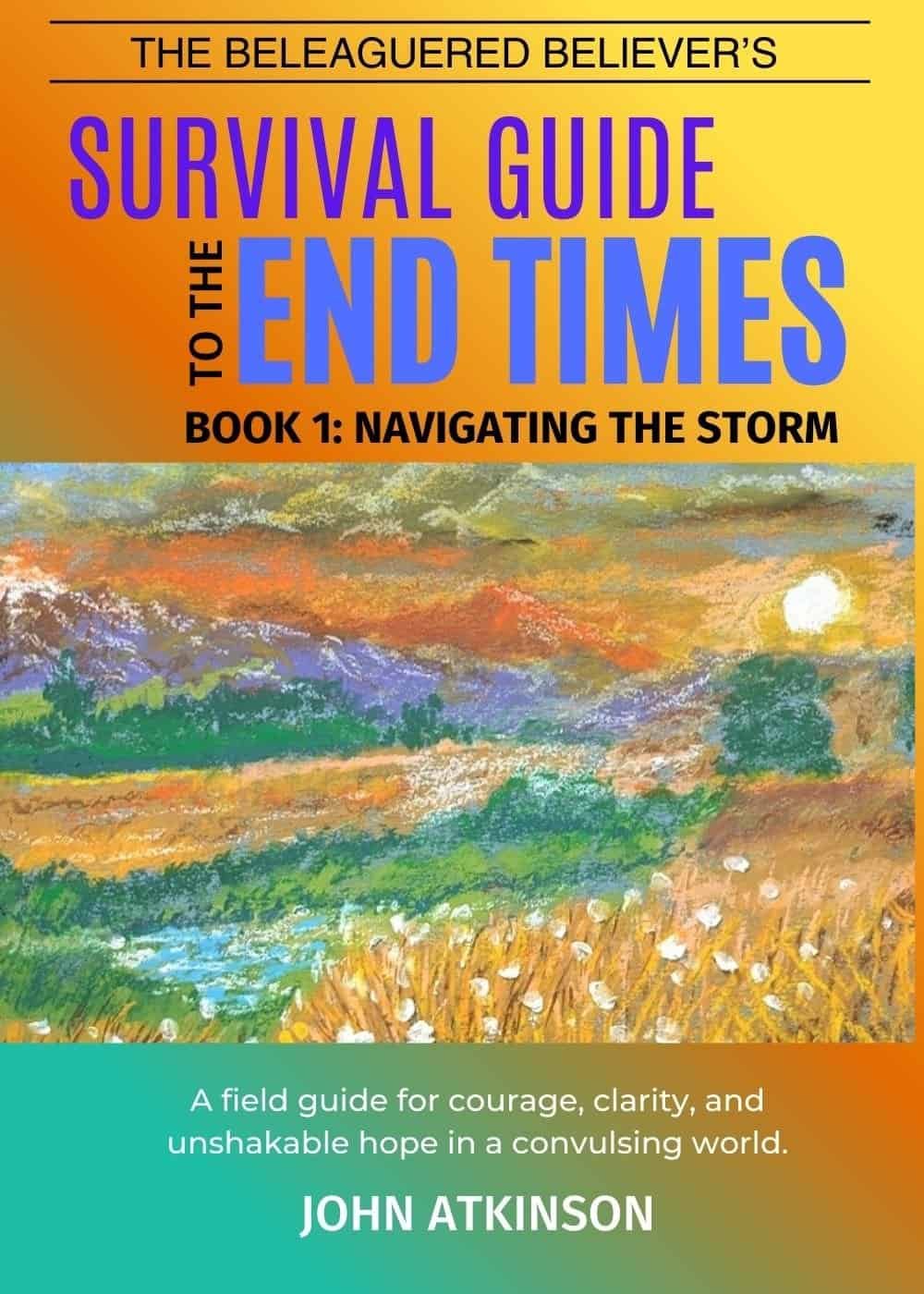
The Survival Guide for Beleaguered Believers is here—offering strength when systems fail, clarity whenlies spread, and hope that endures when the world seems out of control.
Don’t just survive the chaos—stand firm in Christ.
📖 Always free with Kindle Unlimited. Available in paperback and hardcover as well!


The Art of Christian Communications Online
Download The Art of Christian Communication Online—a free guide & workbook to help believers communicate with truth, empathy, and grace in every online conversation.
No email address required.
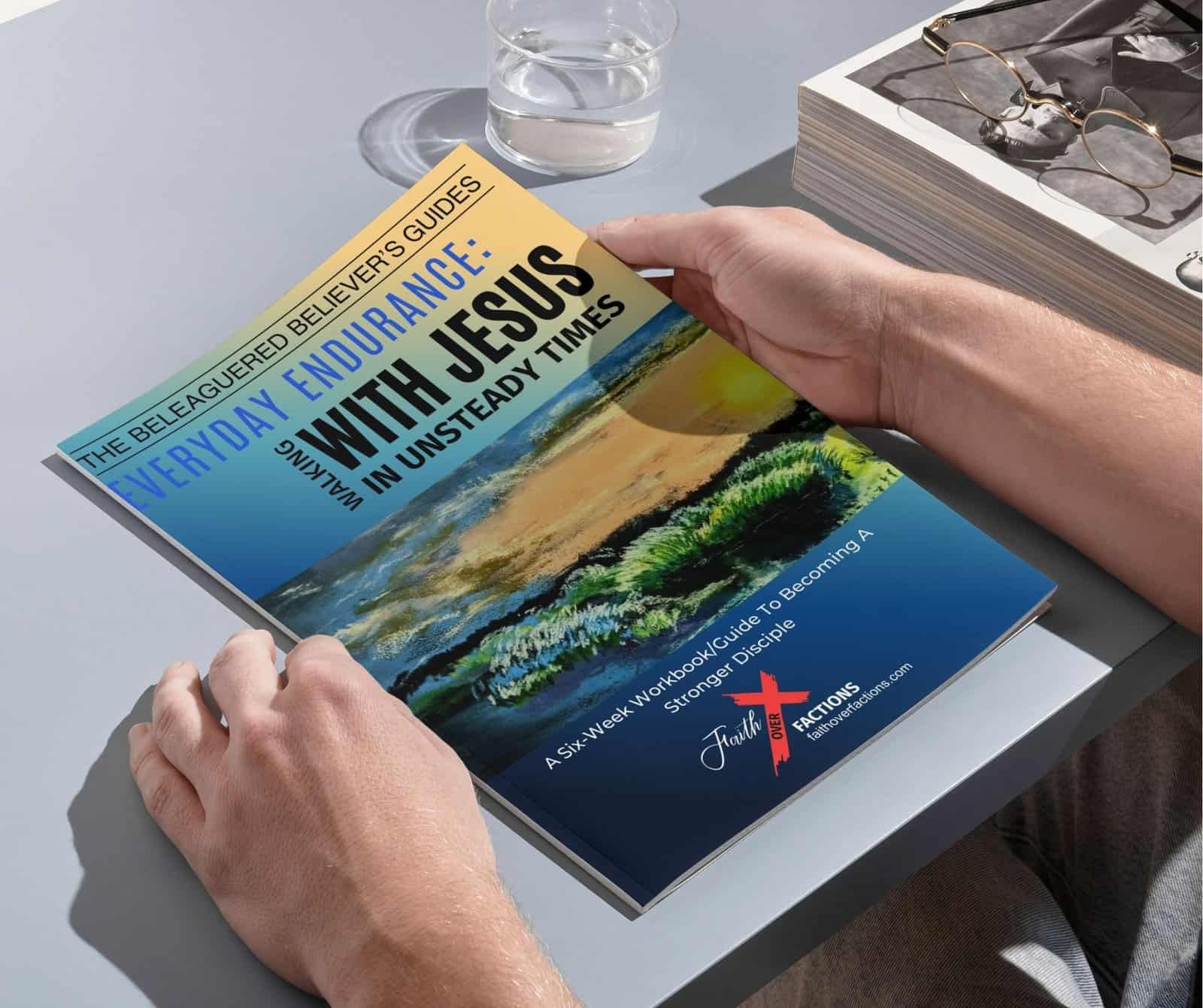
Find strength for weary days.
Download Everyday Endurance: Walking With Jesus in Unsteady Times
—a free devotional guide & workbook to help you build spiritual and emotional resilience through prayer, reflection, and daily trust in God.
No email address required
All Site Photography and Artwork Originals from John's wanders and studio unless noted.
Scripture quotations marked (NLT) are taken from the Holy Bible, New Living Translation, copyright © 1996, 2004, 2015 by Tyndale House Foundation. Used by permission of Tyndale House Publishers, Carol Stream, Illinois 60188. All rights reserved.
Scripture quotations marked (AMP) are taken from the Amplified® Bible,
Copyright © 1954, 1958, 1962, 1964, 1965, 1987, 2015 by The Lockman Foundation
Used by permission. www.lockman.org
We completely recommend E-Sword, a Free Study Bible available for most mobile and desktop platforms.